
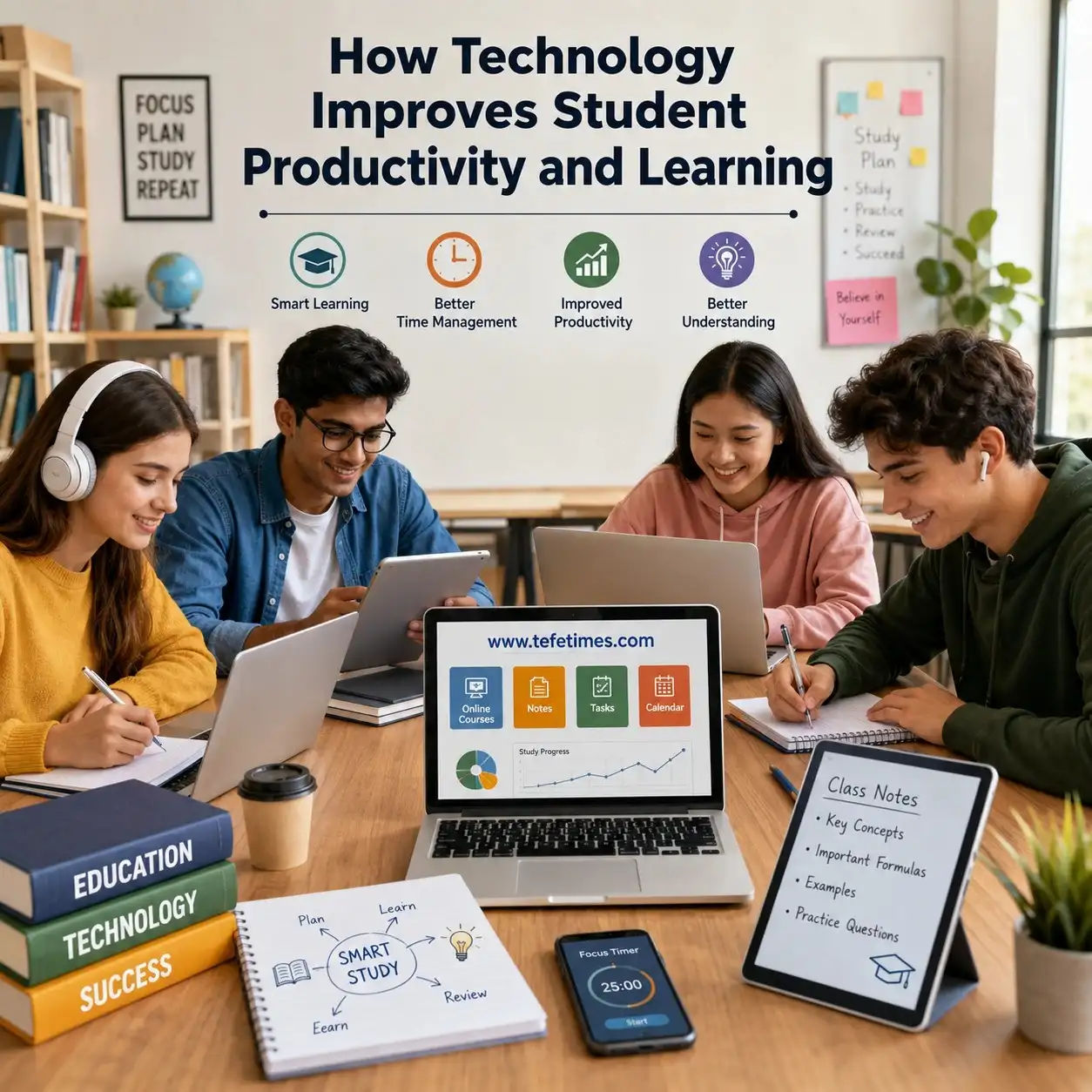
How Technology Improves Student Productivity and Learning
Technology has changed the way students learn, study, communicate, and build skills. A few years ago, students mostly depended on classrooms, textbooks, handwritten notes, and libraries. Today, learning can happen anywhere — on a laptop, smartphone, tablet, or even through a smart TV.
Whether someone is preparing for school exams, learning coding online, attending virtual college classes, or improving language skills through apps, technology has become a major part of modern education.
But here’s something important: technology alone does not automatically improve learning. The real improvement happens when students use the right tools in the right way.
Many students use digital devices daily but still struggle with focus, time management, or productivity. Others use simple online tools wisely and achieve excellent results with limited resources.
So, how exactly does technology improve student productivity and learning?
Let’s explore this in a practical and beginner-friendly way.
What Does Student Productivity Mean?
Student productivity means completing learning tasks effectively while saving time, energy, and effort.
A productive student usually:
- Understands concepts faster
- Manages study time properly
- Stays organized
- Revises efficiently
- Learns consistently
- Uses resources wisely
- Avoids unnecessary distractions
Technology helps improve these areas when used correctly.
For example:
- A digital calendar helps students manage deadlines.
- Online video lessons simplify difficult subjects.
- Note-taking apps organize study material.
- AI-powered language tools improve writing.
- Learning platforms provide flexible education.
In simple words, technology makes learning more accessible, organized, and interactive.
Why Technology Matters in Modern Education
The modern education system is becoming more digital every year. Schools, colleges, and training institutes across the world now use online systems for assignments, lectures, communication, and exams.
Several reasons make technology important for students today:
| Limited classroom access | Learn from anywhere |
| Fixed learning speed | Self-paced learning |
| Heavy textbooks | Digital study material |
| Limited resources | Global information access |
| Manual note organization | Smart productivity tools |
| Physical classes only | Online and hybrid learning |
Technology is especially helpful for:
- Remote learners
- Budget-conscious students
- Working students
- Self-learners
- Students in rural areas
- International learners
You might be wondering if expensive devices are necessary. The answer is no.
Even a basic smartphone with internet access can help students learn valuable skills today.
How Technology Improves Learning Efficiency
1. Easy Access to Information
One of the biggest advantages of technology is instant access to educational content.
Students no longer need to wait for library hours or expensive coaching classes. They can quickly search for explanations, tutorials, research papers, and practice materials online.
For example:
- A math student can watch step-by-step problem-solving videos.
- A language learner can practice speaking using mobile apps.
- A programming beginner can learn coding through free tutorials.
This saves time and improves understanding.
However, students should learn to identify reliable educational sources instead of depending on random information.
A useful educational resource for students is TefeTimes Education Section, where learners can explore practical education-related articles and learning tips.
2. Flexible Learning Anytime
Technology removes location and time barriers.
Students can study:
- Early morning
- Late at night
- During travel
- After school or work
- On weekends
This flexibility is especially useful for:
- College students managing part-time jobs.
- Parents continuing education
- Students preparing for competitive exams
- Online certification learners
Flexible learning helps students build consistent study habits.
3. Better Understanding Through Visual Learning
Some subjects become easier when students can see concepts visually.
Technology supports learning through:
- Animations
- Interactive videos
- Infographics
- Simulations
- Virtual experiments
- Educational presentations
Let’s understand this with an example.
A biology student learning about the human heart may struggle with textbook diagrams. But animated videos showing blood circulation can make the concept much clearer.
Visual learning improves:
- Memory retention
- Concept clarity
- Student engagement
- Attention span
This is why many modern classrooms use smart boards and multimedia presentations.
4. Personalized Learning Experience
Every student learns differently.
Some students learn quickly, while others need more revision and practice.
Technology supports personalized learning by allowing students to:
- Pause lessons
- Replay explanations
- Choose learning speed
- Focus on weak subjects.
- Take adaptive quizzes
For example:
A student struggling with algebra can spend extra time practicing math online without feeling pressured by classroom speed.
This reduces learning stress and increases confidence.
Best Technology Tools for Student Productivity
Technology becomes powerful when students use practical tools effectively.
Here are some useful productivity tools students worldwide commonly use.
| Note-taking apps | Organize notes | Notion, OneNote |
| Task managers | Track assignments | Todoist, Trello |
| Cloud storage | Save files securely | Google Drive |
| Online learning | Study courses | Coursera, Udemy |
| Focus apps | Reduce distractions | Forest |
| Grammar tools | Improve writing | Grammarly |
| Video learning | Visual explanations | YouTube EDU |
Students do not need every app available online. Using 2–4 reliable tools consistently is usually more effective.
How Online Learning Platforms Help Students
Online learning has grown rapidly in recent years.
Students now learn:
- Coding
- Graphic design
- Marketing
- Languages
- Business skills
- Video editing
- Data analysis
- Academic subjects
Many online platforms provide affordable or free education.
Benefits of Online Learning Platforms
Self-Paced Learning
Students can learn slowly without classroom pressure.
Budget-Friendly Education
Many free courses are available online.
Skill-Based Learning
Students can build practical career skills early.
Global Access
Learners from different countries can study the same course.
Certification Opportunities
Some platforms provide certificates that strengthen resumes.
Technology and Time Management
One major challenge students face today is poor time management.
Technology can either improve productivity or destroy focus depending on how it is used.
Helpful Ways Technology Supports Time Management
Digital Calendars
Students can schedule:
- Exam dates
- Study sessions
- Assignment deadlines
- Revision plans
Reminder Apps
Apps send notifications for important tasks.
Study Timers
Pomodoro timer apps help students study in focused sessions.
Goal Tracking
Students can track weekly progress and habits.
For example:
A student preparing for medical entrance exams may divide study hours into focused blocks using productivity apps instead of studying randomly.
This creates structure and reduces stress.
Common Student Productivity Challenges
Even with technology, many students struggle with productivity.
Here are some common problems.
1. Social Media Distractions
Smartphones can easily reduce focus.
Students often switch between studying and scrolling through social media.
2. Information Overload
Too many resources confuse beginners.
Students waste time collecting study materials instead of actually learning.
3. Poor Digital Discipline
Without routines, online learning becomes inconsistent.
4. Multitasking
Studying while watching videos, chatting, and browsing reduces concentration.
5. Lack of Clear Goals
Technology tools are useless without clear learning objectives.
How Students Can Use Technology Productively
Here’s what actually works for most students.
Create a Simple Digital Study System
Use one app for notes, one for scheduling, and one for learning.
Avoid installing too many productivity apps.
Follow a Fixed Study Routine
Technology works best when combined with discipline.
Example routine:
- Morning: Watch learning videos
- Afternoon: Practice exercises
- Evening: Revise notes
- Night: Track progress
Use Focus Techniques
Students can:
- Turn off unnecessary notifications.
- Use website blockers
- Study in quiet environments
- Keep phones away during deep study sessions.
Take Smart Notes
Digital notes help students:
- Search information quickly
- Organize topics
- Access notes anywhere
- Share material with classmates
Learn by Doing
Practical learning improves understanding.
For example:
- Coding students should build small projects.
- Language learners should practice speaking.
- Design students should create sample work.
Technology supports hands-on learning very effectively.
Real-Life Student Examples
Example 1: Budget-Friendly Skill Learning
A college student from a small town learns graphic design using free YouTube tutorials and free design software.
After practicing consistently for six months, the student starts freelancing online.
Technology helped provide affordable learning access.
Example 2: Improving Exam Preparation
A school student uses online mock tests and digital flashcards for science exams.
The student identifies weak topics faster and improves revision speed.
Technology made preparation more organized.
Example 3: Language Learning
A beginner learning English practices daily through mobile apps, podcasts, and online conversations.
Within one year, communication confidence improves significantly.
Technology provided continuous practice opportunities.
Technology in Classroom Learning
Technology also improves traditional classroom education.
Modern schools use:
- Smart classrooms
- Digital attendance systems
- Online assignments
- Educational software
- Interactive learning boards
Teachers can explain difficult concepts more effectively using multimedia tools.
Students become more engaged compared to only listening to lectures.
Benefits of Technology for Different Types of Learners
For School Students
- Interactive learning
- Better homework organization
- Educational games
- Faster doubt-solving
For College Students
- Online research access
- Skill development courses
- Project collaboration tools
- Career preparation resources
For Self-Learners
- Flexible schedules
- Affordable education
- Global learning communities
- Independent skill building
For International Learners
- Language learning support
- Remote education opportunities
- Cross-cultural educational access
Free and Affordable Learning Resources
Students do not always need expensive subscriptions.
Here are some budget-friendly learning options.
Free Educational Platforms
- Khan Academy
- Coursera free courses
- YouTube educational channels
- edX free content
Free Productivity Tools
- Google Docs
- Google Calendar
- Notion free plan
- Microsoft OneNote
Affordable Skill Learning
Students can purchase low-cost online courses during educational discounts or sales.
The Role of Artificial Intelligence in Learning
Modern educational tools increasingly use smart learning systems.
These tools help students by:
- Suggesting practice questions
- Correcting grammar mistakes
- Recommending study material
- Creating personalized quizzes
- Improving language learning
However, students should still focus on understanding concepts instead of depending completely on digital assistance.
Critical thinking remains important.
How Technology Improves Collaboration
Students today often work on group projects online.
Technology allows collaboration through:
- Shared documents
- Video meetings
- Online discussions
- Cloud-based teamwork
For example:
Students from different countries can work together on presentations without meeting physically.
This prepares learners for modern workplaces where remote collaboration is common.
Digital Skills Students Should Learn
Technology is not only helping education — it is becoming part of education itself.
Students should gradually build these digital skills:
Basic Computer Skills
- Typing
- File management
- Online research
- Email communication
Productivity Skills
- Digital organization
- Calendar management
- Presentation creation
Online Safety Skills
- Password security
- Scam awareness
- Privacy protection
Communication Skills
- Professional messaging
- Virtual meeting etiquette
- Online collaboration
These skills are valuable in almost every career today.
Common Mistakes Students Make With Technology
Many students use technology daily but still fail to improve productivity.
Here are some mistakes to avoid.
Depending Only on Videos
Watching lessons without practice reduces learning effectiveness.
Downloading Too Many Apps
Too many tools create confusion.
Ignoring Offline Revision
Writing and active recall remain important.
Studying Without Breaks
Long screen time reduces focus and energy.
Passive Learning
Simply watching content is not enough.
Students should actively:
- Take notes
- Solve problems
- Practice skills
- Test themselves regularly
Healthy Technology Habits for Students
Technology should support health, not harm it.
Useful Healthy Habits
- Take short screen breaks.
- Maintain proper sitting posture.
- Avoid late-night screen overuse.
- Protect eye health
- Balance online and offline activities.
Students should also spend time on:
- Physical exercise
- Outdoor activities
- Face-to-face communication
- Reading physical books occasionally
Balanced learning habits improve long-term productivity.
Future of Technology in Education
Education technology will continue growing rapidly.
Future learning trends may include:
- Virtual reality classrooms
- Interactive simulations
- Personalized digital tutoring
- Global online universities
- Smart assessment systems
- Remote skill-based education
Students who develop digital learning habits early may adapt more easily to future educational systems and workplaces.
Practical Daily Productivity Plan for Students
Here is a simple beginner-friendly study system students can follow.
Morning
- Review goals
- Watch one learning lesson.
- Complete difficult subjects first.
Afternoon
- Practice exercises
- Revise class notes
- Complete assignments
Evening
- Take online quizzes
- Organize notes
- Plan next-day tasks
Night
- Avoid excessive screen time.
- Read summary notes
- Sleep properly
Consistency matters more than studying for extremely long hours.
Final Thoughts
Technology has transformed education in powerful ways. It gives students access to knowledge, flexible learning opportunities, productivity tools, and skill-building resources that were difficult to access in the past.
But the real secret is not simply using technology — it is using it wisely.
Students who combine discipline, focus, and smart digital tools often learn faster, stay more organized, and improve their academic performance significantly.
Whether someone is a school student, college learner, or self-taught beginner, technology can open new opportunities for growth and success.
Start simple.
Choose a few useful tools, build consistent study habits, avoid distractions, and focus on active learning.
Small daily improvements with the right technology can create massive long-term results.