
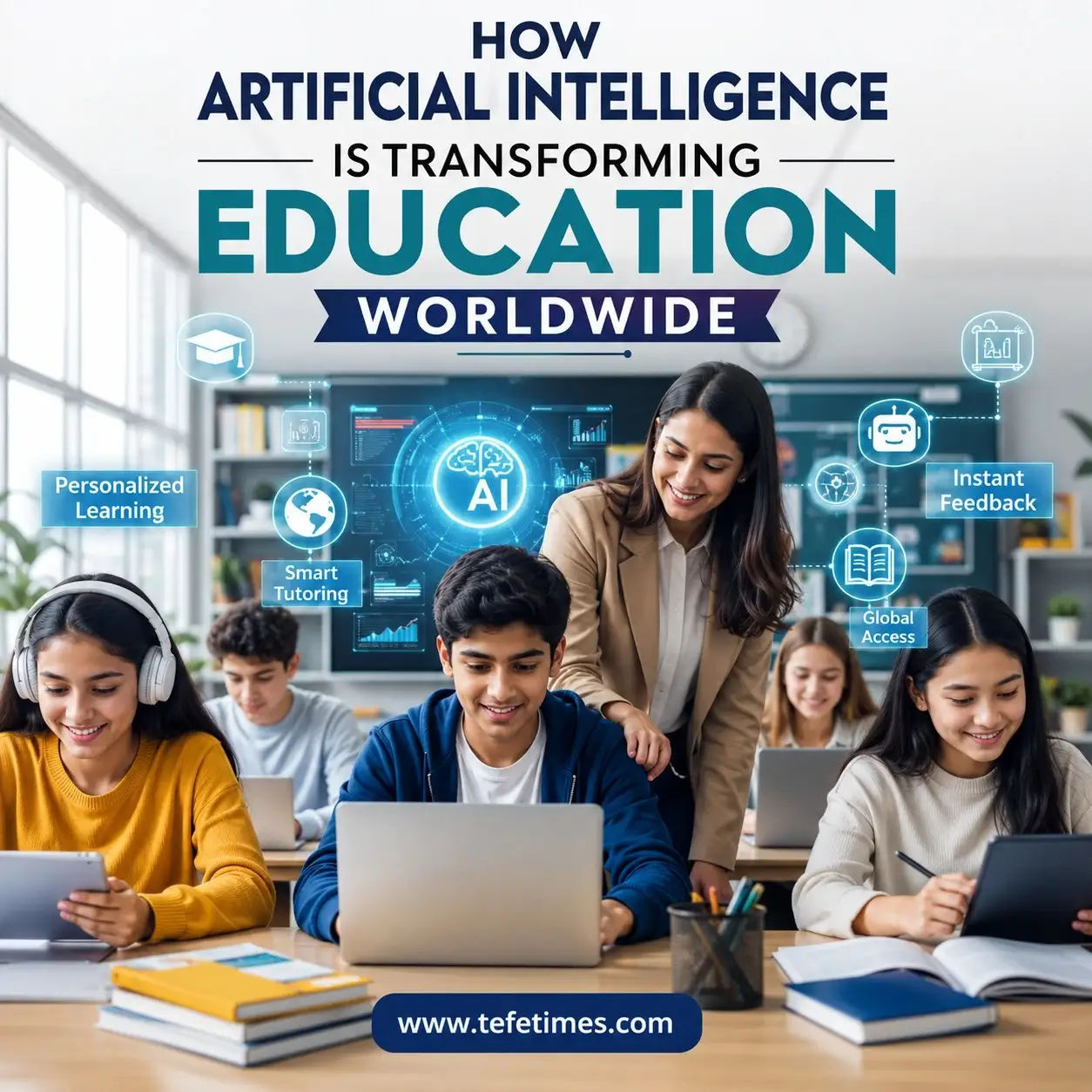
Artificial Intelligence is no longer something limited to science fiction movies or tech companies. Today, it is becoming a part of classrooms, online learning platforms, and daily student life. From personalized study apps to AI-powered tutors, education is changing faster than ever before.
If you are a student, beginner, teacher, or even a parent, you have probably already seen this shift. Maybe you used an app that suggests practice questions based on your performance. Maybe your online course platform recommended lessons automatically. That is AI working in the background.
You might be thinking: is this really helping students, or is it just another trend?
Here is what actually works. Artificial Intelligence is helping students learn faster, access education more easily, and improve skills in ways that were difficult a few years ago. At the same time, it also brings challenges that students need to understand carefully.
In this guide, you will learn how Artificial Intelligence is transforming education, how students can benefit from it, low-cost ways to use AI tools, common mistakes to avoid, and practical strategies for beginners.
What Is Artificial Intelligence in Education?
Artificial Intelligence, often called AI, refers to computer systems that can perform tasks that usually require human intelligence. In education, AI helps analyze learning patterns, automate tasks, personalize lessons, and improve student support.
Instead of giving every student the exact same experience, AI can adjust learning based on individual strengths and weaknesses.
For example:
- A math app can give easier or harder questions depending on your score
- A language learning platform can focus more on words you struggle with
- An online course website can recommend topics based on your interests
This creates a more personalized learning experience.
Today, many students in India and other countries already use AI-powered tools without realizing it.
Why AI Is Becoming Important in Education
The education system is changing because students learn differently now compared to previous generations.
Traditional learning methods often face problems such as:
| Same teaching style for everyone | Personalized learning |
| Limited teacher time | Automated assistance |
| Expensive private coaching | Low-cost online learning |
| Slow feedback on assignments | Instant feedback |
| Lack of practice resources | Unlimited digital practice |
AI is helping solve many of these problems, especially for students who cannot afford expensive coaching classes or international programs.
In India, many students from small towns are now accessing quality education using smartphones and affordable internet connections. This is one of the biggest transformations happening in modern learning.
How Artificial Intelligence Is Changing Classrooms
Personalized Learning Experience
Every student learns at a different speed. Some understand science quickly but struggle with mathematics. Others may learn better through videos instead of textbooks.
AI systems analyze student performance and create customized learning paths.
For example:
- If a student struggles with algebra, the system may suggest extra practice.
- If a student performs well in coding, advanced lessons may unlock automatically.
- Language apps may repeat weak vocabulary words more often.
This helps students improve without feeling left behind.
Smart Online Learning Platforms
Online education platforms now use AI to improve learning quality.
Popular platforms students commonly use include:
These platforms use AI to recommend courses, quizzes, revision plans, and study schedules.
Students no longer need to depend only on physical classrooms.
AI Tutors and Chatbots
AI-powered tutors are becoming very popular among students.
Unlike traditional tutoring, AI tools are available anytime. Students can ask questions late at night, during travel, or while revising before exams.
This is especially useful for students preparing for:
- Board exams
- Competitive exams
- Coding interviews
- English speaking improvement
- Skill development courses
Many beginners feel shy about asking questions repeatedly in class. AI chatbots remove that hesitation.
Automated Grading and Feedback
Teachers spend many hours checking assignments and tests. AI can help automate this process.
Benefits include:
- Faster results
- Detailed performance analysis
- Instant corrections
- Reduced teacher workload
Students can improve quickly because feedback comes immediately instead of waiting several days.
AI Tools Students Are Using Today
Students worldwide are already using AI in different ways.
AI Writing Assistance
Writing tools help students:
- Improve grammar
- Correct spelling mistakes
- Simplify sentences
- Structure essays
These tools are useful for assignments, emails, resumes, and presentations.
AI for Coding Education
Programming students use AI coding assistants to:
- Understand syntax
- Fix errors
- Learn faster
- Practice coding challenges
Beginners especially benefit because coding errors can feel confusing during early learning stages.
AI Language Learning Apps
AI-powered language apps help students improve:
- Pronunciation
- Vocabulary
- Listening skills
- Speaking confidence
Many Indian students preparing for international education or jobs use such platforms to improve their English communication skills.
AI Study Planning Tools
Students often struggle with time management.
AI-based planners can:
- Create study schedules
- Send reminders
- Track progress
- Recommend revision timing
This helps reduce exam stress.
Benefits of Artificial Intelligence in Education
Better Access to Learning
One major advantage of AI is accessibility.
A student living in a small town can now access high-quality learning resources using only a smartphone and an internet connection.
This reduces the education gap between urban and rural students.
Budget-Friendly Education
Traditional coaching institutes can be expensive.
AI-powered learning platforms often provide:
- Free courses
- Affordable subscriptions
- Trial classes
- Low-cost certifications
Students with limited budgets can still develop valuable skills.
Learning at Your Own Pace
Some students need more time to understand concepts.
AI allows self-paced learning. Students can:
- Pause lectures
- Repeat lessons
- Practice multiple times
- Learn without pressure
This creates a more comfortable learning environment.
Improved Student Engagement
Interactive quizzes, gamified lessons, and smart recommendations make learning more engaging.
Students are more likely to stay motivated when education feels interactive instead of boring.
Support for Different Learning Styles
Not every student learns through textbooks.
AI tools can provide:
- Videos
- Audio explanations
- Interactive exercises
- Visual simulations
This flexibility helps more students succeed.
Challenges and Concerns of AI in Education
While AI has many advantages, students should also understand its limitations.
Overdependence on Technology
Some students start relying too much on AI tools.
This can reduce:
- Critical thinking
- Problem-solving ability
- Creativity
- Independent learning habits
AI should support learning, not replace effort.
Privacy Concerns
Many platforms collect student data.
Students should avoid sharing sensitive personal information unnecessarily.
Always use trusted educational platforms.
Unequal Internet Access
Not all students have fast internet or modern devices.
Although education access is improving, digital inequality still exists in many regions.
Incorrect Information
AI tools can sometimes provide wrong answers or outdated information.
Students should verify important academic facts using reliable sources.
Step-by-Step Guide for Students to Use AI Wisely
Step 1: Identify Your Learning Goal
Start by asking:
- Do you want to improve coding?
- Are you preparing for exams?
- Do you want better English communication?
- Are you learning a new skill?
Your goal determines which AI tools are useful.
Step 2: Start With Free Platforms
Beginners should avoid spending too much money initially.
Use free or low-cost learning platforms first.
Good starting options include:
- Free YouTube educational channels
- Free coding websites
- Free language learning apps
- Open educational courses
Step 3: Use AI as a Study Assistant
AI works best when used alongside traditional learning.
For example:
- Use AI to explain difficult topics.
- Practice questions using AI apps
- Improve writing drafts
- Create study summaries
But still read textbooks and practice independently.
Step 4: Verify Information
Always double-check important facts.
Use trusted educational websites and teacher guidance whenever necessary.
Step 5: Build Practical Skills
Learning theory alone is not enough.
If you learn coding, build projects.
If you learn design, create samples.
If you improve English, practice speaking daily.
If you learn design, create samples.
If you improve English, practice speaking daily.
AI helps most when combined with action.
Low-Cost and Free AI Learning Methods
Students often worry that modern education tools are expensive. The good news is that many effective learning methods are affordable.
Free Educational YouTube Channels
YouTube remains one of the best free learning platforms.
Students can learn:
- Coding
- Mathematics
- Science
- Graphic design
- Digital marketing
- English communication
Many channels explain concepts better than traditional classrooms.
Free Coding Platforms
Beginners can practice programming on platforms like:
These platforms are beginner-friendly and widely used by students worldwide.
Affordable Skill-Based Courses
Many online learning websites offer discounts during festivals and sales.
Students can purchase valuable courses at very low prices compared to traditional institutions.
Smartphone-Based Learning
You do not always need an expensive laptop.
Many students successfully learn using:
- Budget smartphones
- Free mobile apps
- Offline downloads
- Digital notes
This is especially useful for students with limited resources.
Popular Areas Where AI Is Improving Education
Medical Education
AI helps medical students through:
- Virtual simulations
- Diagnostic practice
- 3D anatomy tools
- Research assistance
Engineering Education
Engineering students use AI for:
- Coding practice
- Circuit simulations
- Project assistance
- Technical calculations
Language Learning
AI-powered speech analysis helps students improve pronunciation and communication.
Competitive Exam Preparation
Students preparing for exams like:
- JEE
- NEET
- UPSC
- IELTS
- GRE
Use AI-based mock tests and personalized revision plans.
Common Mistakes Students Should Avoid
Copying Without Understanding
One major mistake is copying answers directly from AI tools.
This weakens actual learning.
Always try to understand the concept first.
Using Too Many Tools
Students sometimes install many apps and become overwhelmed.
Instead:
- Choose 2 or 3 reliable platforms.
- Focus on consistency
- Avoid unnecessary distractions
Ignoring Practical Practice
Watching videos alone does not build skills.
You must practice regularly.
For example:
- Coding requires building projects.
- English requires speaking practice.
- Mathematics requires solving questions.
Expecting Instant Results
Skill development takes time.
AI can speed up learning, but consistency still matters most.
Practical Strategies That Actually Work
Create a Daily Learning Routine
Even 1 to 2 hours daily can produce excellent results over time.
Consistency matters more than studying 10 hours once a week.
Learn One Skill at a Time
Do not try to learn everything together.
Focus improves progress.
Use AI for Revision
AI tools are excellent for:
- Quick summaries
- Flashcards
- Practice tests
- Concept explanations
Combine Free and Paid Resources
You do not always need expensive subscriptions.
A balanced approach works best.
For example:
- Use free YouTube tutorials.
- Buy one affordable, specialized course.
- Practice using free tools
Build Real Projects
Practical experience improves confidence and employability.
Students can build:
- Websites
- Presentations
- Writing portfolios
- Design samples
- Coding applications
The Future of AI in Education
Education will continue changing rapidly.
Future developments may include:
- Virtual reality classrooms
- Advanced AI tutors
- Real-time translation systems
- More personalized learning
- Skill-based career guidance
Students who adapt early may gain strong advantages in future careers.
However, human teachers will still remain important. Emotional support, motivation, mentorship, and real-world guidance cannot be fully replaced by machines.
The best future will likely combine technology with human teaching.
How Students Can Prepare for an AI-Driven Future
Improve Digital Skills
Basic digital literacy is becoming essential.
Students should learn:
- Internet research
- Online communication
- Digital productivity tools
- Basic coding knowledge
Develop Critical Thinking
AI can provide information quickly, but students must still think independently.
Learn to:
- Analyze information
- Ask questions
- Compare sources
- Solve problems logically
Focus on Creativity and Communication
Human creativity still matters greatly.
Students should improve:
- Communication skills
- Presentation skills
- Creative thinking
- Team collaboration
These abilities remain valuable even in an AI-powered world.
Real-Life Student Scenario
Imagine a college student from a small Indian town preparing for a software career.
A few years ago, that student may have needed:
- Expensive coaching
- Large city relocation
- Costly study materials
Today, the same student can:
- Learn coding online
- Watch free tutorials
- Practice using AI tools
- Join online communities
- Build projects from home.
This is one of the biggest reasons AI-powered education is becoming so important.
It is creating opportunities for students who previously had limited access to quality learning.
Final Thoughts
Artificial Intelligence is transforming education in ways that were difficult to imagine just a decade ago. Learning is becoming more flexible, accessible, personalized, and affordable.
For students and beginners, this creates exciting opportunities.
But success still depends on how wisely these tools are used.
AI can help explain concepts, organize study plans, and improve learning speed. However, real progress still comes from consistency, curiosity, and practical effort.
Start small.
Choose one skill.
Use reliable learning platforms.
Practice regularly.
Avoid shortcuts.
Focus on understanding instead of memorization.
Use reliable learning platforms.
Practice regularly.
Avoid shortcuts.
Focus on understanding instead of memorization.
That approach works far better than chasing every new trend.
If used correctly, Artificial Intelligence can become one of the most powerful learning companions students have ever had.
For more educational guides and beginner-friendly learning content, visit TefeTimes.