
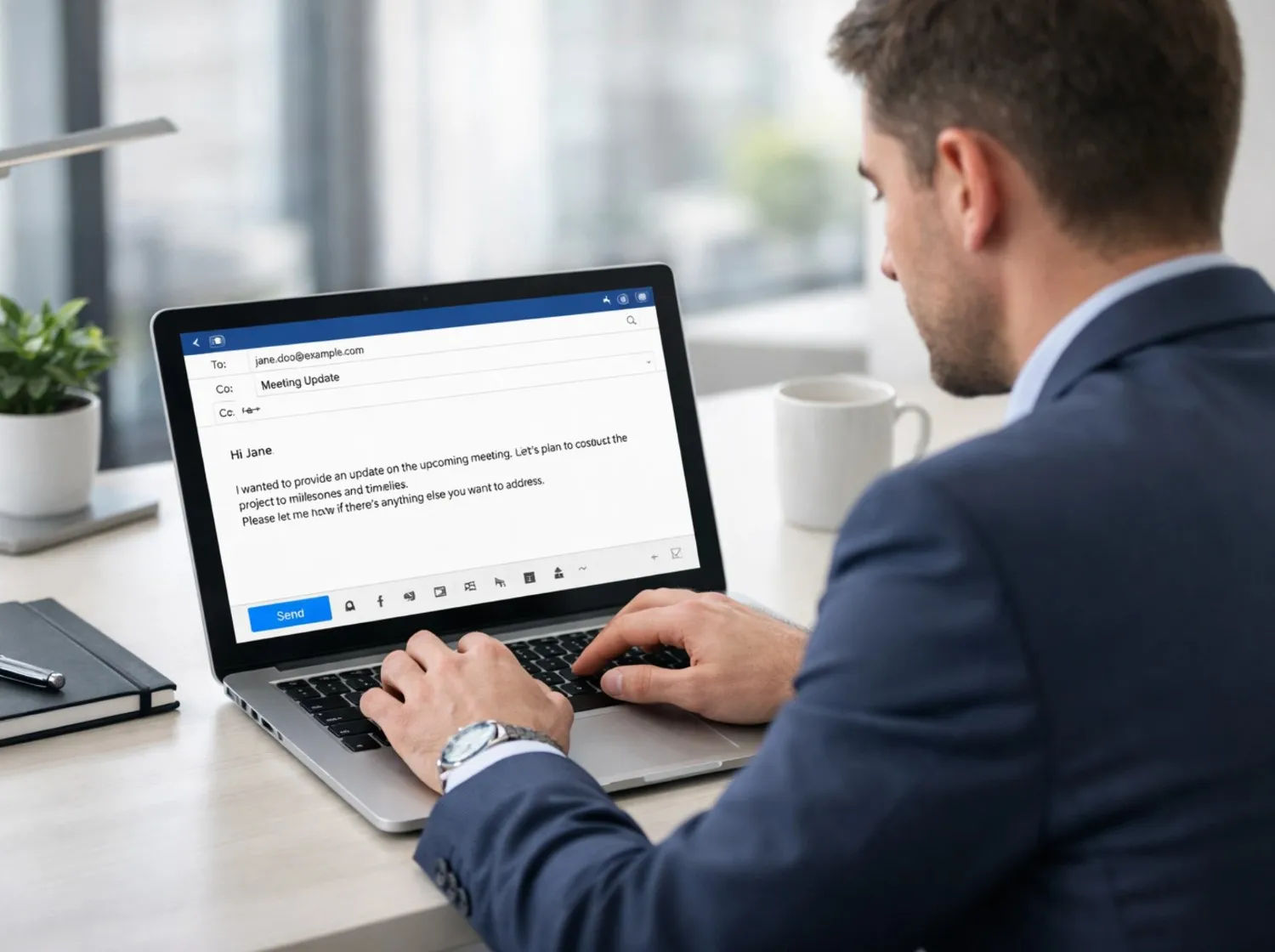
Email is one of the most important communication tools in today’s digital world. Whether you are applying for a job, contacting a client, talking to your teacher, or sending a business proposal — email is used everywhere.
Even though email writing looks easy, many people struggle with one simple question:
“How should I start an email?”
The beginning of your email is very important because it creates your first impression. If your email starts in a professional and clear way, the reader will take you seriously. But if your opening is weak or confusing, your message might be ignored.
In this detailed guide, you will learn everything step by step in very simple language:
- How to start an email properly
- Types of email greetings
- Best opening lines
- Real-life examples
- Mistakes to avoid
- Pro tips to improve your email writing
By the end of this blog, you will be able to write professional emails with confidence.
Why the Email Opening is Important
Imagine meeting someone for the first time. The way you greet them decides how they feel about you. The same thing happens in emails.
The first few lines of your email:
- Create your image
- Show your professionalism
- Decide if the reader will continue reading
Benefits of a Good Email Start
- Builds a strong first impression
- Shows respect to the receiver
- Makes your message clear
- Increases reply chances
- Builds trust
If your email starts well, your chances of getting a positive response become much higher.

Basic Structure of Starting an Email
A perfect email opening has 3 simple parts:
1. Greeting
This is how you address the person.
2. Opening Line
This is your first sentence.
3. Purpose
This explains why you are writing the email.
Example:
Dear Sir,
I hope you are doing well.
I am writing to apply for the job opening.
Simple, clear, and professional.
Types of Email Greetings
1. Formal Greetings
Use these when writing professional emails:
- Dear Sir/Madam
- Dear Mr. Sharma
- Dear Ms. Gupta
- Dear Hiring Manager
- Dear Team
Use in:
- Job applications
- Office emails
- Client communication
2. Semi-Formal Greetings
- Hello Rahul
- Hi Neha
Use when you know the person but still want to be professional.
3. Informal Greetings
- Hey
- Hi buddy
Use only with friends or close colleagues.
Best Opening Lines for Emails
Professional Opening Lines
- I hope you are doing well.
- I hope this email finds you well.
- I hope you are having a great day.
Direct Opening Lines
- I am writing to inform you that…
- I am writing regarding…
- I would like to request…
Friendly Opening Lines
- Hope you are doing great!
- It was nice meeting you.

How to Start an Email for Different Situations
1. Job Application Email
Dear Hiring Manager,
I hope you are doing well.
I am writing to apply for the position of Digital Marketing Executive.
2. Business Email
Dear Sir,
I hope this email finds you well.
I would like to discuss our business proposal.
3. Follow-Up Email
Hello Sir,
I hope you are doing well.
I am following up regarding my previous email.
4. Complaint Email
Dear Support Team,
I am writing to report an issue with your service.
5. Friendly Email
Hi Rahul,
Hope you are doing great!
Just wanted to check in with you.
Mistakes to Avoid While Starting an Email
Avoid these common mistakes:
- Using “Hey” in formal emails
- Writing wrong name of the person
- Skipping greeting
- Writing very long introduction
- Using slang language
- Adding emojis in professional emails
These small mistakes can reduce your professionalism.

Pro Tips to Write a Perfect Email Opening
- Always use the person’s name if possible
- Keep your opening short and clear
- Be polite and respectful
- Match tone with situation
- Check grammar before sending
- Avoid copying same lines again and again
Advanced Email Opening Techniques
If you want to stand out, use these methods:
1. Personalization
Example:
I saw your recent post on LinkedIn and found it very helpful.
2. Appreciation
Example:
I really appreciate your work in digital marketing.
3. Straight to the Point
Example:
I am reaching out to discuss a business opportunity.
Real Examples You Can Copy
Example 1
Dear Sir,
I hope you are doing well.
I am writing to inquire about your services.
Example 2
Hello Team,
I hope this email finds you well.
I would like to schedule a meeting.
Example 3
Hi Amit,
Hope you are doing great!
Just checking in regarding our last discussion.
Why Simple Language Works Best
Many people think professional email means using difficult English. That is not true.
Simple language:
- Is easy to understand
- Looks clean and professional
- Saves time
- Avoids confusion
Always try to write clear and simple sentences.
Email Tone Matters
Tone means how your message sounds.
- Formal → respectful and professional
- Friendly → casual and warm
- Direct → straight to the point
Choose your tone based on the situation.
Email Opening vs Subject Line
Don’t confuse both:
- Subject Line → What the email is about
- Opening Line → How you start writing
Both should be clear and connected.
Final Checklist Before Sending Email
- Correct name
- Proper greeting
- Clear opening line
- No spelling mistakes
- Professional tone
Conclusion
Starting an email may look simple, but it plays a very important role in communication.
A strong email opening:
- Creates a powerful first impression
- Builds trust
- Improves reply chances
If you follow the tips in this guide, you can easily write professional and effective email openings.
Final Thought
The earlier you learn email writing, the better your communication skills will become. Email is a skill that will help you in jobs, business, and daily life.