
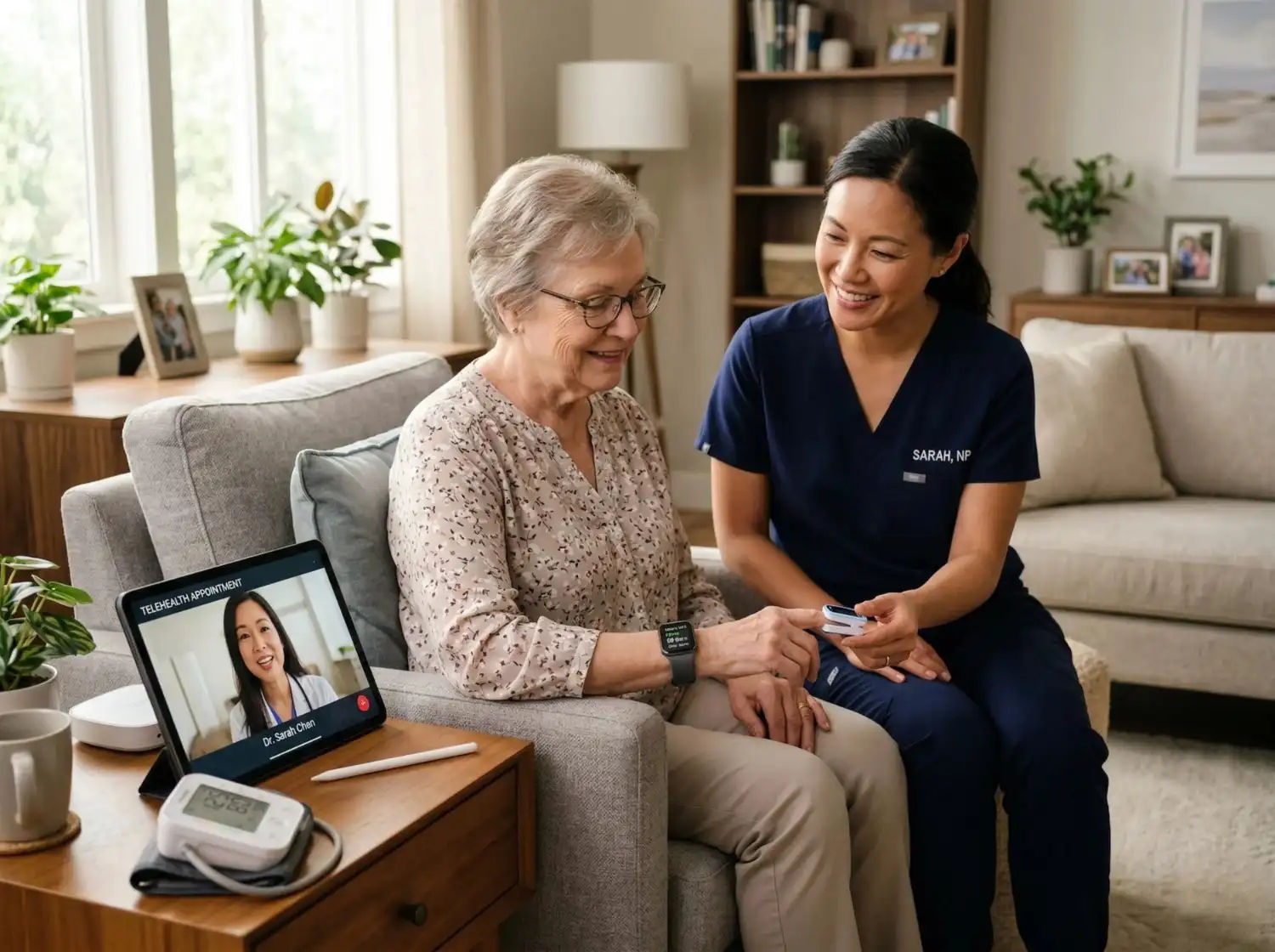
How Future Healthcare Technology is Elevating At-Home Care
Introduction
Future healthcare technology is changing the way people receive medical care at home. Earlier, if someone got sick, they had to visit a hospital or clinic every time, which was time-consuming and sometimes stressful. But now, modern technology is making it possible for people to get medical help while staying at home.
This change is very important because it makes healthcare easier, faster, and more accessible for everyone. Whether it is a small health issue or regular checkups, patients can now connect with doctors and manage their health without leaving their homes. This is especially helpful for elderly people, patients recovering from surgery, and people living in remote areas.
Technology is not replacing doctors. Instead, it is helping doctors work more efficiently and helping patients get better care. The combination of human care and digital tools is making healthcare stronger and more reliable.
What is At-Home Healthcare?
At-home healthcare means receiving medical support at your home instead of going to a hospital or clinic.
It includes:
- Online doctor consultations through video or mobile apps
- Regular health monitoring using smart devices
- Support from caregivers and nurses at home
- Medicine reminders and treatment guidance
This type of care is very helpful for:
- Elderly people who cannot travel easily
- Patients with long-term illnesses like diabetes or heart disease
- People recovering after surgery
- Individuals who need continuous health monitoring
At-home care ensures comfort while still providing proper medical attention.

How Future Healthcare Technology is Improving At-Home Care
1. Telemedicine and Online Consultations
Telemedicine allows patients to talk to doctors using video calls, apps, or even phone calls. This is one of the biggest improvements in modern healthcare.
Benefits:
- No need to travel to hospitals
- Saves time and money
- Quick access to medical advice
- Easy follow-ups with doctors
People living in small towns and villages can now connect with expert doctors from big cities without any difficulty. This has made healthcare more equal and accessible for everyone.

2. Remote Patient Monitoring
Remote monitoring is one of the most powerful tools in modern healthcare. It allows doctors to track a patient’s health from a distance.
Common devices include:
- Blood pressure monitors
- Glucose monitoring devices
- Heart rate trackers
- Smartwatches and fitness bands
These devices send real-time data to doctors, which helps in:
- Early detection of health problems
- Continuous health tracking
- Quick response in case of emergencies
This system is especially useful for patients with chronic conditions.
3. Smart Healthcare Devices
Smart devices are becoming a part of everyday life. These devices make health monitoring simple and accurate.
Examples:
- Digital thermometers
- Smart inhalers
- Wearable health trackers
- Connected medical equipment
These devices are easy to use and provide accurate data that helps both patients and doctors understand health conditions better.

4. Mobile Health Applications
Mobile health apps are playing a very important role in at-home healthcare.
These apps help:
- Set reminders for taking medicines
- Track daily activities like sleep and exercise
- Store medical reports safely
- Provide health tips and alerts
With just a smartphone, patients can manage their health easily. These apps also help caregivers stay updated about the patient’s condition.
5. Artificial Intelligence in Healthcare
Artificial Intelligence (AI) is helping doctors make better decisions by analyzing large amounts of data quickly.
AI can:
- Detect diseases at an early stage
- Suggest possible treatments
- Analyze patient health patterns
- Reduce human errors
AI is becoming a powerful tool that supports doctors and improves patient outcomes.

Benefits of At-Home Healthcare Technology
1. Comfort and Peace of Mind
Patients feel more comfortable at home, which helps in faster recovery. Being with family gives emotional support.
2. Time Efficiency
There is no need to wait in long queues or travel to hospitals. Everything is available at your fingertips.
3. Reduced Healthcare Costs
At-home care reduces expenses related to travel, hospital stays, and unnecessary visits.
4. Continuous Monitoring
Doctors can monitor patients regularly using smart devices, which improves treatment results.
5. Increased Safety
Patients can avoid exposure to infections by staying at home, especially during pandemics or seasonal diseases.
Challenges in At-Home Healthcare
Even though technology is improving healthcare, some challenges still exist:
- Lack of digital knowledge among some people
- Need for stable internet connection
- High cost of advanced devices
- Preference for in-person consultations
However, with time, awareness and affordability are increasing, making these challenges smaller.
Future of Healthcare Technology
The future of healthcare is very bright and full of possibilities.
In the coming years, we can expect:
- More advanced AI systems for better diagnosis
- Smart homes with built-in health monitoring systems
- Virtual reality-based treatments and training
- Better and more affordable wearable devices
- Fully connected healthcare systems where doctors and patients are always connected
Healthcare will become more personalized, meaning treatment will be designed according to each individual’s needs. This will improve patient care and outcomes.
Conclusion
Future healthcare technology is transforming at-home care in a powerful and meaningful way. It is making healthcare more accessible, faster, and more comfortable for people everywhere.
With tools like telemedicine, smart health devices, mobile apps, and artificial intelligence, patients can now manage their health without leaving home. This not only improves convenience but also ensures better monitoring and faster response in case of health issues.
As technology continues to grow, at-home healthcare will become even more advanced, reliable, and accessible. It is a positive step toward a future where quality healthcare is available to everyone, regardless of location or situation.