
Introduction
If you are still thinking that Artificial Intelligence (AI) is just a trend, then the reality is — AI is already shaping the world around you.
Today:
- AI tools are writing content
- Software is analyzing data automatically
- Machines are making decisions faster than humans
From tools like ChatGPT to automation platforms used by businesses, AI is everywhere.
So the big question is:
Will AI replace human jobs, or will it create new opportunities?
The truth is not simple. AI is doing both.
Some jobs are disappearing.
Many new jobs are being created.
And most jobs are evolving.
The real challenge is not AI itself — it is how quickly we adapt.
How Artificial Intelligence is Changing the World
Artificial Intelligence is transforming the world in powerful ways. It is not limited to one industry — it is impacting every sector.
• Increased Productivity
AI can complete tasks in seconds that would take humans hours.
• Better Decision-Making
AI analyzes large amounts of data and provides accurate insights.
• Innovation and Growth
New products, services, and startups are emerging because of AI.
According to the McKinsey Global Institute, AI could contribute trillions of dollars to the global economy by 2030.
Will AI Help the World or Hurt It?
This is one of the biggest debates today.
People Who Support AI Say:
- It will increase efficiency
- Improve healthcare
- Make education more accessible
People Who Oppose AI Say:
- It will replace jobs
- Reduce human involvement
- Increase inequality
The truth lies somewhere in between.
AI is a tool — and like any tool, its impact depends on how humans use it.
How AI is Affecting Jobs and the Economy
AI is already reshaping the global job market.
Reports suggest:
- AI could add massive value to global GDP
- Companies are rapidly adopting AI technologies
- Automation is replacing repetitive tasks
According to Forbes, AI is one of the most disruptive technologies in modern history.

How Many Jobs Will AI Replace?
Several reports give us a clear picture of what’s coming.
- Up to 300 million jobs could be affected globally
- Around 25% of work tasks may be automated
- Nearly 70% of companies are expected to adopt AI
The World Economic Forum estimates that millions of jobs will be displaced — but many new ones will also be created.
Jobs Most Likely to Be Replaced by AI
Some jobs are more vulnerable because they involve repetitive and predictable tasks.
High-Risk Jobs:
-
Customer Service Representatives
AI chatbots can answer common questions quickly. -
Receptionists
Automated systems can handle calls and visitors. -
Accountants and Bookkeepers
AI tools can manage financial data efficiently. -
Sales Representatives
Digital marketing and AI targeting reduce manual selling. -
Data Analysts (Basic Level)
AI can process and analyze large datasets faster. -
Warehouse Workers
Automation is improving logistics operations. -
Insurance Underwriters
AI can assess risk using data models. -
Retail Cashiers
Self-checkout systems are becoming common.
Jobs That AI Cannot Replace Easily
Despite its power, AI cannot replace every job.
Safer Jobs Include:
-
Teachers
Human interaction and inspiration are essential. -
Doctors and Surgeons
Decision-making and patient care require human judgment. -
Psychologists
Emotional understanding cannot be replicated by AI. -
Managers and CEOs
Leadership involves vision and human connection. -
HR Professionals
Managing people requires empathy and communication. -
Lawyers and Judges
Legal decisions involve ethics and interpretation. -
Artists and Writers
Creativity and originality are deeply human traits.
AI vs Human Comparison Table
| Factor | AI | Humans |
|---|---|---|
| Speed | Extremely fast | Moderate |
| Accuracy | High | Medium |
| Creativity | Limited | High |
| Emotions | None | Strong |
| Learning | Data-driven | Experience-driven |
| Decision-making | Logical | Emotional + Logical |

Who Is Winning in 2026?
The answer is simple:
Neither AI nor humans are winning alone.
The real winner is:
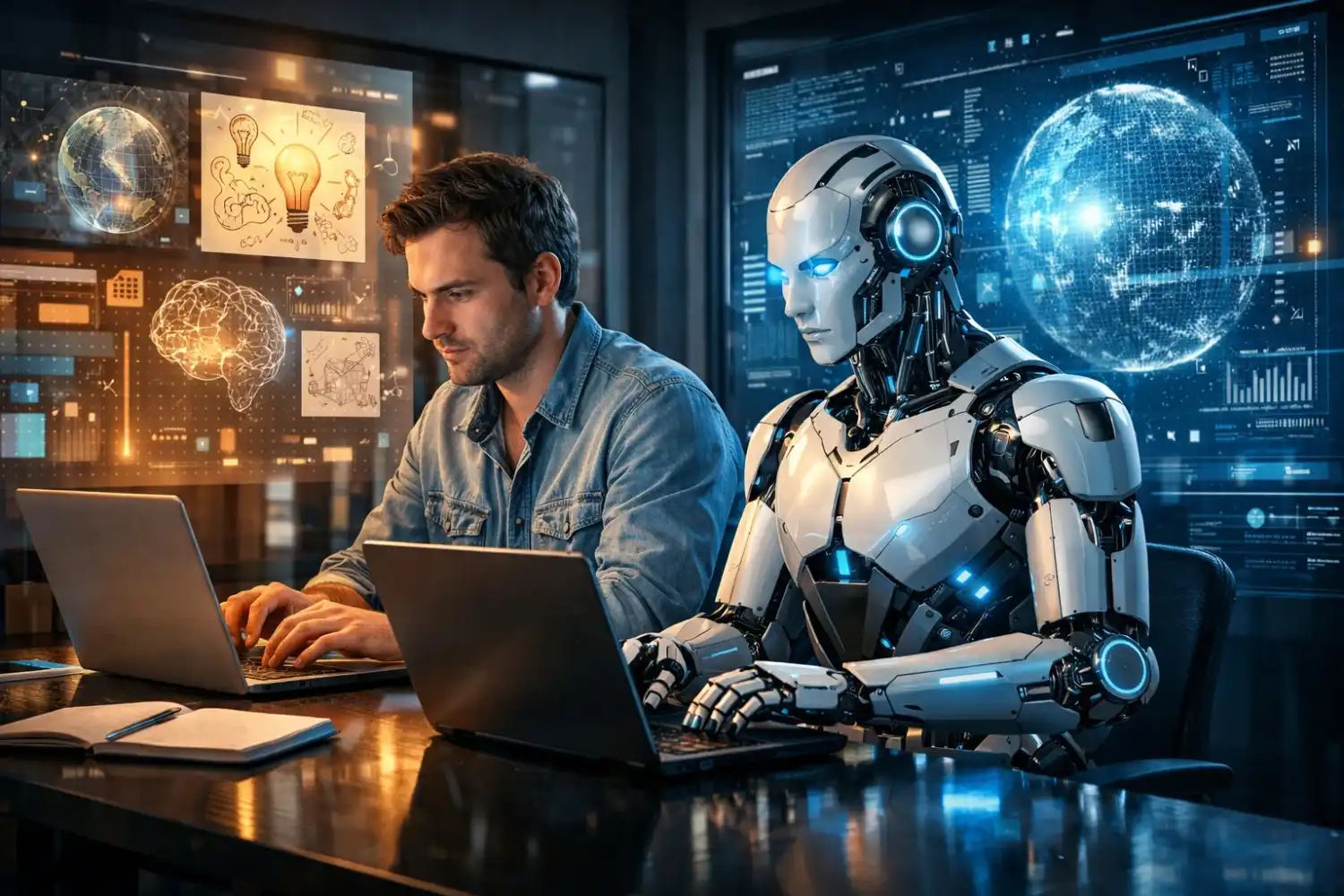
Collaboration between AI and humans
AI handles:
- Data
- Repetitive tasks
- Speed
Humans handle:
- Creativity
- Strategy
- Emotions
Together, they create the best results.
How AI Will Affect Society
AI is not just changing jobs — it is transforming society.
Positive Effects:
- Faster services
- Better healthcare systems
- Smart infrastructure
Negative Effects:
- Job displacement
- Skill gaps
- Over-reliance on machines
How to Quickly Change Your Career in the AI Era
If your job is at risk, don’t panic. Instead, take action.
Steps to Follow:
- Learn new digital skills
- Start using AI tools
- Take online courses
- Build real-world projects
- Gain practical experience
To explore more about starting a tech career, visit:
Tefetimes – How to Start a Career in Technology

How to Stay Ahead in the AI Era
1. Embrace Lifelong Learning
Keep updating your skills regularly.
2. Develop Soft Skills
Communication, creativity, and teamwork are essential.
3. Be Adaptable
Be ready to learn and change quickly.
4. Specialize
Focus on one area and become an expert.
Future of Jobs (2026–2030)
Experts predict:
- Around 85 million jobs may disappear
- Over 100 million new jobs may be created
This means:
- There will be losses
- But even more opportunities
The Reality Check
AI is not replacing all jobs.
It is mainly replacing:
- Repetitive tasks
- Low-skill roles
High-value jobs are growing faster than ever.
Advantages of AI
- Speed
- Accuracy
- Cost efficiency
- 24/7 availability
Disadvantages of AI
- Job loss risk
- Lack of emotions
- High dependency
Advantages of Humans
- Creativity
- Emotional intelligence
- Innovation
- Leadership
Conclusion
AI vs Human is not a battle — it is a transformation.
Technology will continue to evolve, and so will jobs.
The people who succeed in 2026 and beyond will be those who:
- Learn continuously
- Adapt quickly
- Use AI as a tool
Final Thought
AI will not replace humans.
But humans who use AI will replace those who don’t.