
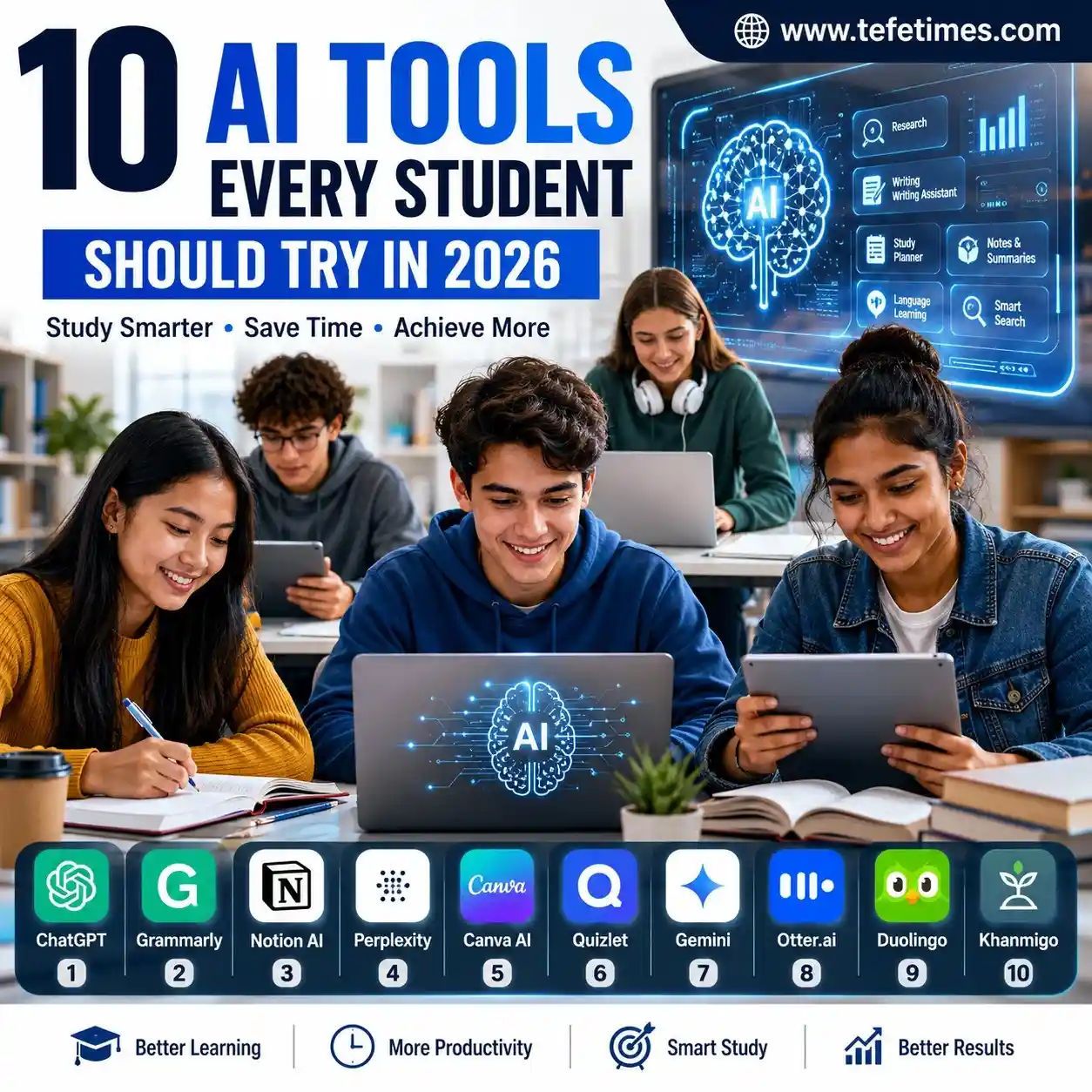
10 AI Tools Every Student Should Try in 2026
Education is changing faster than ever. Students today are no longer learning only through textbooks and classrooms. Digital learning, online courses, research platforms, and productivity apps have become part of everyday education.
In 2026, students are dealing with more information, tighter schedules, and growing academic competition. Managing assignments, preparing for exams, taking notes, researching topics, and staying productive can feel overwhelming.
That is where modern AI-powered educational tools can help.
Used correctly, these tools do not replace learning. Instead, they make studying more efficient, improve organization, support creativity, and help students focus on understanding concepts more deeply.
You might be wondering:
"Which tools are actually useful for students?"
This guide explains 10 practical AI tools students around the world should explore in 2026.
Whether you are a school student, college learner, online student, or self-learner, these tools can help improve your learning experience.
Why Students Are Using AI Learning Tools More Than Ever
Modern education comes with real challenges:
- Information overload
- Time management problems
- Difficulty staying focused
- Research complexity
- Writing assignments
- Language barriers
- Note organization issues
- Productivity struggles
AI-powered educational technology helps students solve these challenges faster.
Benefits include:
- Faster research
- Better study organization
- Improved writing quality
- Smarter note-taking
- Personalized learning support
- Increased productivity
- Better exam preparation
The goal is simple:
Study smarter—not just longer.
Quick Comparison Table
| ChatGPT | Learning explanations | Yes | Beginners, college students |
| Grammarly | Writing improvement | Yes | Essay writers |
| Notion AI | Organization | Limited free access | Productivity-focused students |
| Perplexity | Research | Yes | Researchers |
| Canva AI | Presentations | Yes | Creative learners |
| Quizlet AI | Exam preparation | Yes | School and college students |
| Gemini | Information assistance | Yes | Everyday learning |
| Otter.ai | Lecture notes | Yes | Online learners |
| Duolingo AI | Language learning | Yes | Language students |
| Khanmigo | Guided education support | Limited access | School learners |
1. ChatGPT
Try: ChatGPT
One of the most useful learning tools students can use in 2026 is ChatGPT.
Students use it to:
- Understand difficult concepts
- Simplify textbook explanations
- Create study summaries
- Practice interview questions
- Generate practice quizzes
- Learn coding basics
- Improve writing clarity
Let’s understand this with an example.
A beginner learning physics struggles to understand gravity equations.
Instead of reading multiple complicated websites, they can ask:
"Explain gravity in simple language with examples."
The explanation becomes easier to understand.
Another student preparing for exams can ask for:
- Topic summaries
- Revision questions
- Concept breakdowns
Best for:
- School learners
- College students
- Self-learners
- Online education students
Tip:
Use it as a learning assistant—not a shortcut.
2. Grammarly
Try: Grammarly
Writing assignments remain a major challenge for students worldwide.
Grammar mistakes, sentence clarity problems, and weak structure can affect academic performance.
Grammarly helps improve:
- Grammar
- Spelling
- Tone
- Clarity
- Readability
Students writing:
- Essays
- Research papers
- Scholarship applications
- Email communication
can benefit significantly.
Example:
A college student writes a 1,000-word assignment.
Before submission, Grammarly highlights:
- Grammar corrections
- Word repetition
- Sentence improvements
Small improvements often make writing stronger.
3. Notion AI
Try: Notion
Student productivity often fails because of poor organization.
Assignments get lost.
Deadlines are forgotten.
Study plans become messy.
Notion AI helps organize learning into one workspace.
Students can manage:
- Notes
- Assignment schedules
- Project planning
- Study calendars
- Research materials
Example study setup:
Weekly Student Dashboard
Monday:
- Math revision
Tuesday:
- Science assignment
Wednesday:
- Language practice
Thursday:
- Project work
Friday:
- Exam preparation
A simple system often improves consistency.
4. Perplexity
Try: Perplexity AI
Research is one of the hardest skills beginners learn.
Students often waste time opening multiple tabs.
Perplexity focuses on faster information discovery.
Useful for:
- Research projects
- Topic exploration
- Study references
- Quick fact finding
Example:
A university student researching climate change can get summarized information with source references faster.
That saves valuable study time.
Remember:
Always verify academic sources before using information in formal assignments.
5. Canva AI
Try: Canva
Presentations matter in modern education.
Students increasingly create:
- Slides
- Posters
- Infographics
- Study visuals
- Group project designs
Canva simplifies visual creation.
Example:
A business student needs a presentation in 24 hours.
Instead of spending hours designing manually, templates speed up the process.
Benefits:
- Beginner friendly
- Free templates
- Visual learning support
- Team collaboration
Creative skills are becoming more valuable every year.
6. Quizlet
Try: Quizlet
Memorization remains important.
Vocabulary.
Definitions.
Historical dates.
Scientific terms.
Quizlet helps students practice using study methods like:
- Flashcards
- Practice tests
- Learning games
- Revision activities
Example:
A medical student preparing anatomy terms can create custom practice material.
Repeated exposure improves retention.
Here’s what actually works:
Combine active recall with spaced repetition.
Learning becomes more effective.
7. Gemini
Try: Google Gemini
Students frequently need help:
- Brainstorming ideas
- Explaining concepts
- Organizing study material
- Drafting project outlines
Gemini supports information gathering and learning assistance.
Example:
A student building a science fair presentation can organize ideas faster.
Technology should reduce friction—not reduce learning effort.
8. Otter.ai
Try: Otter.ai
Lecture note-taking is difficult.
Students often miss important information while trying to write everything down.
Otter.ai helps record and organize spoken information.
Useful for:
- Online classes
- Meetings
- Study groups
- Lecture review
Example:
An online learner attending virtual lessons can revisit important details later.
Reviewing material multiple times strengthens understanding.
9. Duolingo AI Features
Try: Duolingo
Language skills matter globally.
Students increasingly learn:
- English
- Spanish
- French
- German
- Japanese
Language learning apps improve consistency.
Example:
A student learning English for university admission practices daily for 15 minutes.
Small habits produce meaningful improvement.
Tips:
- Study consistently
- Practice speaking
- Review mistakes regularly
Consistency beats intensity.
10. Khanmigo
Try: Khan Academy
Students often struggle because learning feels one-size-fits-all.
Guided educational support helps learners progress at their own pace.
Khanmigo supports:
- Guided learning
- Practice support
- Educational explanations
- Study reinforcement
This becomes especially useful for:
- School students
- Independent learners
- Homework support
Budget-friendly educational tools matter because quality learning should remain accessible.
Free and Low-Cost Learning Strategies That Actually Work
Technology helps, but habits matter more.
Combine tools with these strategies:
1. Study in Small Sessions
Try:
25 minutes learning + 5 minutes break.
Consistency improves focus.
2. Use Active Recall
Instead of rereading notes:
Ask yourself questions.
Test understanding.
3. Build a Weekly Learning System
Example:
| Revision | 30 min |
| Practice problems | 45 min |
| Reading | 20 min |
| Notes organization | 15 min |
Small systems create long-term improvement.
4. Reduce Digital Distractions
Common distractions:
- Social media scrolling
- Constant notifications
- Multitasking
Focused study time usually wins.
Common Mistakes Students Should Avoid
Many learners adopt technology incorrectly.
Avoid these mistakes:
Depending Entirely on Tools
Learning still requires:
- Thinking
- Practice
- Revision
Ignoring Critical Thinking
Always question information.
Check sources.
Understand concepts deeply.
Trying Too Many Apps
Students often install 20 tools.
Then use none consistently.
Choose 2–4 tools first.
Build habits.
Expand later.
Skipping Practice
Knowledge improves through action.
Reading alone is rarely enough.
Productivity Tips for Students in 2026
Modern students need better systems.
Try these practical strategies:
Create a Digital Study Space
Keep:
- Notes organized
- Files labeled
- Deadlines visible
Use Calendar Blocking
Example:
9:00–10:00 → Assignment work
10:00–10:30 → Break
10:30–11:30 → Revision
Structure improves execution.
Track Learning Progress
Measure:
- Study hours
- Completed lessons
- Practice test scores
Progress creates motivation.
Real-Life Student Scenario
Imagine two university students.
Student A:
- Studies randomly
- Uses no organizational system
- Misses deadlines
Student B:
- Uses productivity tools
- Organizes notes
- Revises consistently
- Tracks progress
After three months:
Student B often experiences lower stress and stronger learning consistency.
Technology alone is not the answer.
Better habits plus useful tools create better outcomes.
Future Trends Students Should Watch
Education technology will continue evolving.
Students may increasingly see:
- Personalized learning systems
- Smarter educational feedback
- Interactive study environments
- Better accessibility tools
- More global online learning opportunities
According to educational technology research, digital learning tools continue expanding across modern education environments worldwide. UNESCO Education Technology Resources
Students who adapt early often build stronger long-term learning skills.
For more education and student learning insights, explore:
Final Thoughts
The best student technology in 2026 is not about replacing effort.
It is about improving learning quality.
Start small.
Pick two or three tools.
Build consistent study habits.
Experiment.
Track progress.
Adjust your system.
The students who succeed long term are rarely the ones working endlessly.
They are often the ones learning more effectively.
If you are beginning your learning journey, start today.
One small improvement repeated consistently can create remarkable results over time.