Introduction
Remote work has transformed how people build careers, earn income, and collaborate with organizations around the world.
A few years ago, working remotely was considered a special benefit. Today, it has become a standard option across industries, including technology, education, finance, marketing, healthcare, customer service, and consulting.
However, simply having internet access is no longer enough.
Employers are actively searching for professionals who possess specific remote work skills that help them communicate effectively, stay productive, solve problems independently, and contribute to distributed teams.
If you want to increase your chances of landing remote opportunities, understanding the most in-demand skills is essential.
In this guide, you'll discover the top remote work skills employers value, how to develop them, and practical ways to stay competitive in the global job market.
Search Intent Analysis
Primary Keyword
Top In-Demand Skills for Remote Work
Secondary Keywords
- Remote work skills
- Work from home skills
- Remote job skills
- Online career skills
- Digital workplace skills
- Future remote jobs
Semantic Keywords
- Virtual collaboration
- Digital communication
- Remote productivity
- Online teamwork
- Project management
- Freelancing skills
- Technology skills
Search Intent Type
Informational
User Pain Points
- Unsure which skills employers want
- Difficulty finding remote jobs
- Lack of experience working remotely
- Fear of automation and changing job markets
- Competition from global applicants
Why Remote Work Skills Matter More Than Ever
Companies are hiring talent globally rather than limiting recruitment to local candidates.
This means professionals now compete with applicants from different countries and backgrounds.
The people who succeed are not always the most educated or experienced.
Instead, they often possess skills that make remote collaboration smooth and efficient.
According to workforce trends reported by organizations such as the World Economic Forum and LinkedIn, digital communication, adaptability, technology literacy, and problem-solving continue to rank among the most valuable workplace skills.
Core Skills Every Remote Worker Needs
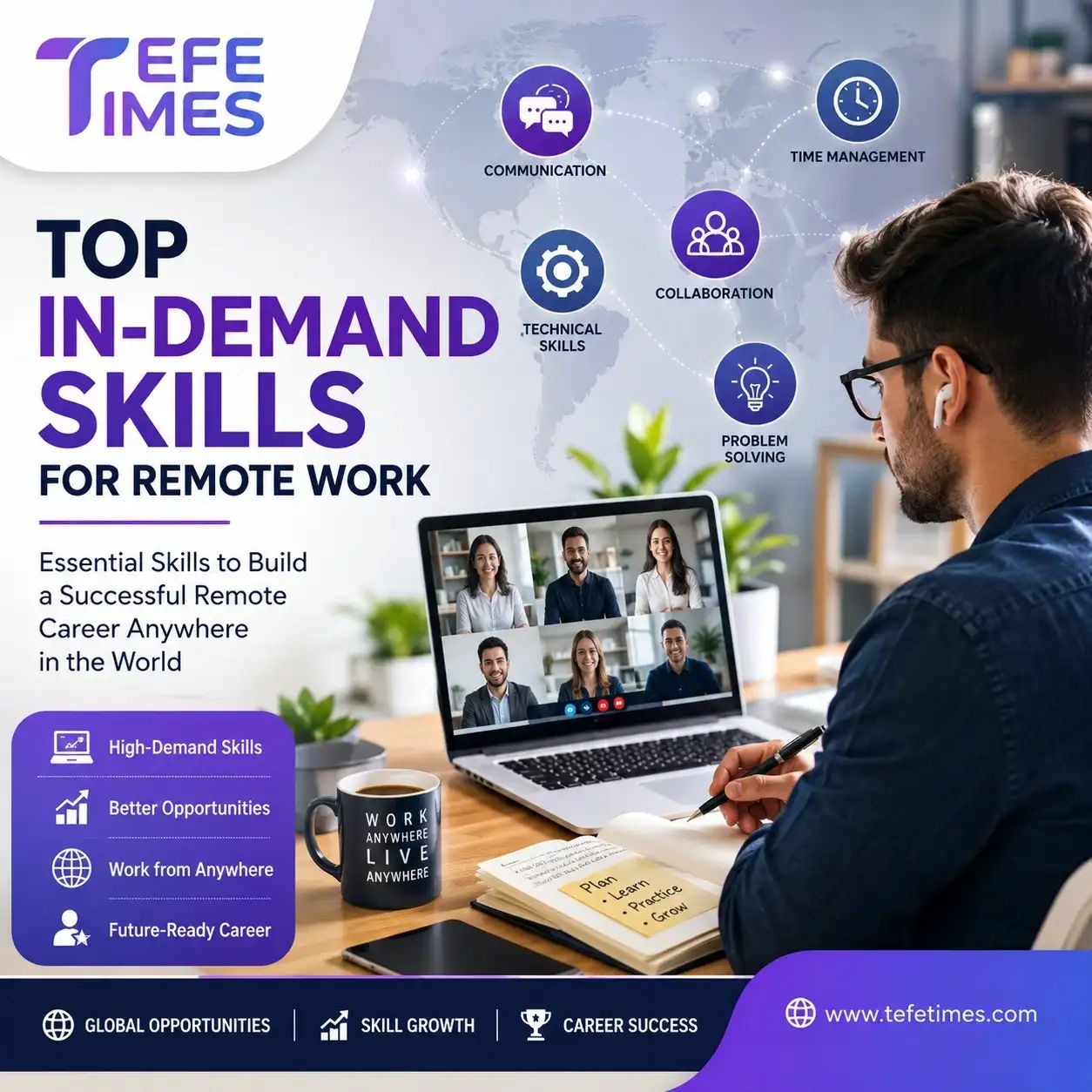
1. Communication Skills
Communication is the foundation of successful remote work.
Without face-to-face interaction, professionals must communicate clearly through:
- Video meetings
- Chat platforms
- Project management tools
Strong communication helps avoid misunderstandings and increases productivity.
Example
A project manager working with teams across three countries must provide clear instructions that everyone understands.
2. Digital Literacy
Remote work relies heavily on technology.
Professionals should be comfortable using:
- Cloud storage systems
- Video conferencing software
- Collaboration tools
- Productivity platforms
Popular tools include:
- Zoom
- Microsoft Teams
- Google Workspace
- Slack
- Trello
For more technology resources, visit:
3. Time Management
Remote employees often work independently.
Without effective time management, deadlines can quickly become overwhelming.
Key strategies include:
- Prioritizing tasks
- Creating daily schedules
- Reducing distractions
- Setting clear goals
Many successful remote workers use time-blocking techniques to stay focused.
4. Self-Discipline
Many beginners struggle with this.
Working from home means fewer direct supervisors and more personal responsibility.
Successful remote professionals:
- Maintain routines
- Track progress
- Meet deadlines consistently
- Stay accountable
Employers highly value individuals who can manage themselves effectively.
5. Problem-Solving Skills
Remote workers often face challenges independently.
Employers prefer people who can:
- Analyze situations
- Find solutions
- Make decisions confidently
Problem-solving increases efficiency and reduces dependence on constant supervision.
Technical Skills That Are Highly In Demand
The following technical skills continue to experience strong demand globally.
| Data Analysis | Very High | Excellent |
| Digital Marketing | Very High | Excellent |
| Software Development | Very High | Excellent |
| Cybersecurity | Very High | Excellent |
| UI/UX Design | High | Excellent |
| Content Creation | High | Excellent |
| Cloud Computing | Very High | Excellent |
| AI Tool Management | High | Growing |
Best Remote Career Skills by Industry
Technology
- Programming
- Cloud Computing
- Cybersecurity
- Data Science
Learn more:
Education
- Online Teaching
- Course Development
- Virtual Tutoring
- Learning Management Systems
Explore:
Finance
- Financial Analysis
- Bookkeeping
- Investment Research
- Financial Planning
Explore:
Digital Marketing
- SEO
- Content Marketing
- Social Media Strategy
- Email Marketing
Step-by-Step Guide to Developing Remote Work Skills
Step 1: Assess Your Current Skills
Identify:
- Technical strengths
- Communication abilities
- Productivity habits
Step 2: Choose a Career Path
Focus on one direction:
- Technology
- Marketing
- Education
- Design
- Finance
Specialization improves job opportunities.
Step 3: Learn Industry Tools
You might be wondering where to start.
Begin with tools commonly used in your field.
Useful resources:
Step 4: Build Real Projects
Employers often value proof of skills more than certificates.
Examples:
- Create a website
- Run a marketing campaign.
- Design a portfolio
- Analyze datasets
Step 5: Develop Remote Collaboration Experience
Join:
- Volunteer projects
- Online communities
- Freelance opportunities
These experiences strengthen practical skills.
Real-World Example
Let's understand this with an example.
Sarah worked as a traditional office administrator.
She developed:
- Communication skills
- Project management skills
- Digital collaboration skills
Within a year, she secured a fully remote operations role with an international company.
Her success came from upgrading practical workplace skills rather than earning another degree.
Case Study: Remote Marketing Specialist
A freelance marketer started with basic social media knowledge.
Over time, they learned:
- SEO
- Analytics
- Email marketing
- Content strategy
After building a portfolio, they attracted clients from multiple countries and transitioned into a full-time remote career.
This demonstrates how focused skill development can create global opportunities.
Common Mistakes Remote Workers Make
1. Learning Too Many Skills at Once
Focus on one valuable skill before expanding.
2. Ignoring Soft Skills
Technical knowledge alone is not enough.
3. Poor Communication
Remote teams depend heavily on clear communication.
4. Lack of Organization
Disorganized workflows reduce productivity.
5. Avoiding Continuous Learning
Remote industries evolve rapidly.
Budget-Friendly Ways to Learn Remote Skills
You don't need expensive programs.
Affordable learning options include:
- Free online courses
- Educational blogs
- Community workshops
- YouTube tutorials
- Practice projects
- Open-source contributions
Additional learning resources:
Expert Tips for Remote Career Success
Focus on Results
Employers care about outcomes.
Show measurable achievements whenever possible.
Build a Portfolio
A strong portfolio often outperforms a long resume.
Improve Written Communication
Most remote communication happens through writing.
Learn Collaboration Tools
Employers expect familiarity with modern digital platforms.
Keep Learning
Continuous improvement helps maintain competitiveness.
Future Trends in Remote Work
Several trends are shaping the future workforce.
Artificial Intelligence Integration
Professionals who can effectively work alongside AI-powered tools will have an advantage.
Global Hiring
Companies increasingly recruit talent worldwide.
Hybrid Work Models
Many organizations combine office and remote work.
Skills-Based Hiring
Employers are focusing more on skills than degrees.
Digital Collaboration Growth
Virtual teamwork will continue expanding globally.
Key Takeaways
- Communication remains the most important remote work skill.
- Digital literacy is essential in modern workplaces.
- Time management increases productivity.
- Problem-solving improves employability.
- Technical skills create specialized opportunities.
- Continuous learning supports long-term success.
- Building real projects accelerates career growth.
Frequently Asked Questions
What is the most important skill for remote work?
Communication is widely considered the most important remote work skill because it affects collaboration, productivity, and team success.
Do I need technical skills to work remotely?
Not always. Many remote roles focus on communication, customer support, teaching, writing, administration, and project coordination.
Which remote skill pays the most?
Software development, cybersecurity, cloud computing, and data science often offer some of the highest salaries.
How can beginners start learning remote work skills?
Start with communication, digital literacy, and productivity skills before moving into specialized technical areas.
Are remote jobs growing worldwide?
Yes. Global organizations continue expanding remote and hybrid work opportunities across many industries.
Conclusion
Remote work is no longer a temporary trend. It is becoming a permanent part of the global economy.
Professionals who invest in communication, digital literacy, problem-solving, self-management, and industry-specific expertise will continue to find new opportunities in the evolving workforce.
Whether you are a student, professional, teacher, parent, or career changer, developing these in-demand skills can open doors to flexible, location-independent career opportunities around the world.
For additional insights, explore: