
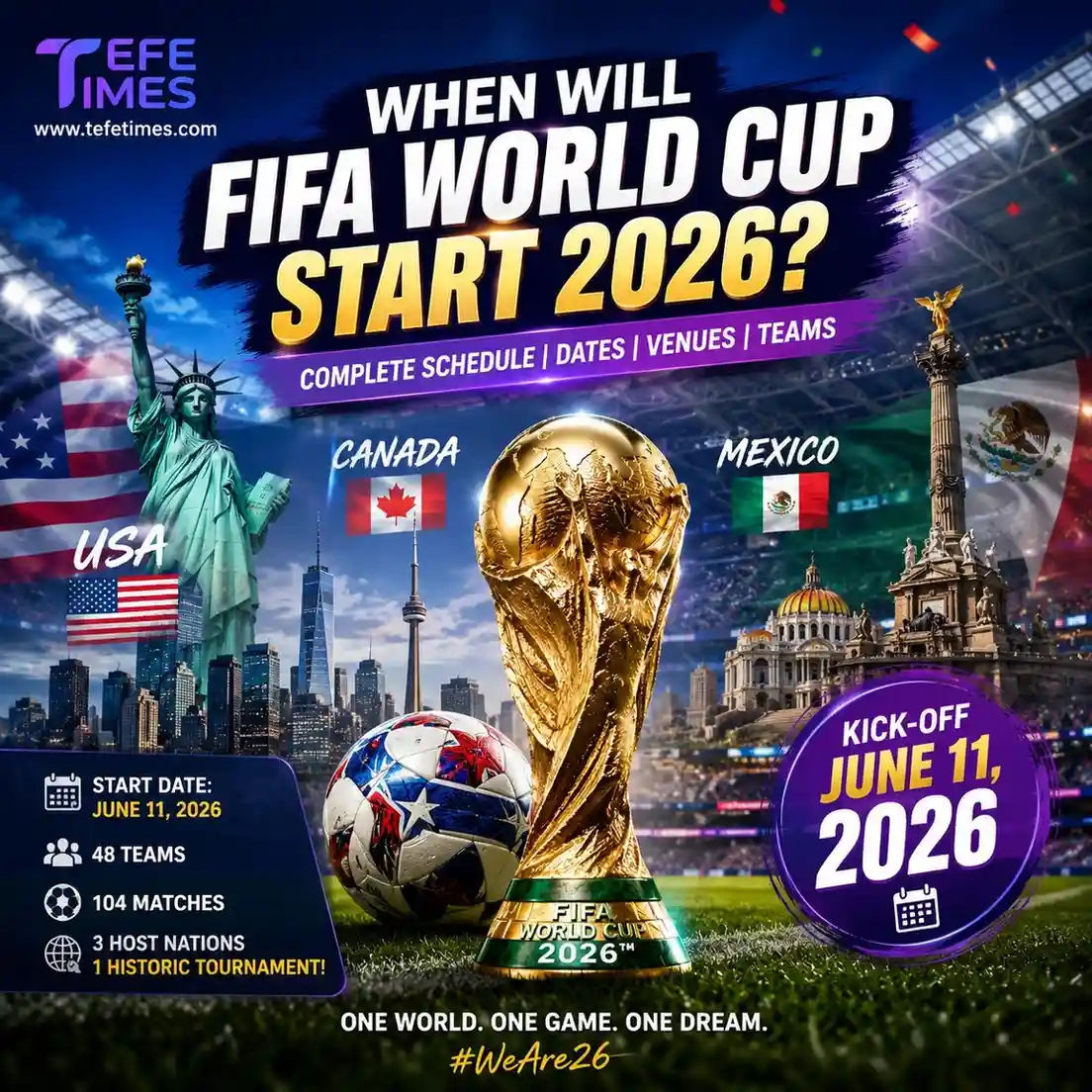
When will the FIFA World Cup start in 2026? Complete Guide for Football Fans
Football fans across the globe are eagerly counting down to the biggest sporting event on Earth. If you're asking, "When will the FIFA World Cup start in 2026?", you're not alone.
The FIFA World Cup 2026 is expected to be one of the most historic editions ever. For the first time, three countries will host the tournament together, and the competition will feature more teams than any previous World Cup.
Whether you're a passionate football supporter, a casual viewer, or someone planning to attend matches, this guide covers everything you need to know about the FIFA World Cup 2026.
FIFA World Cup 2026 Start Date
The FIFA World Cup 2026 is scheduled to begin on June 11, 2026.
The tournament will open with a grand opening match in Mexico City, marking the start of a month-long football celebration involving nations from every continent.
The final match is expected to be played on July 19, 2026.
Quick Answer
| Tournament | FIFA World Cup 2026 |
| Start Date | June 11, 2026 |
| Final Match | July 19, 2026 |
| Host Countries | USA, Canada, Mexico |
| Teams | 48 |
| Total Matches | 104 |
Why the FIFA World Cup 2026 Is Historic
The 2026 tournament introduces several major changes.
First Three-Nation Host
The event will be jointly hosted by:
- United States
- Canada
- Mexico
This will be the first World Cup hosted by three nations.
Expanded Tournament Format
Previous World Cups featured 32 teams.
In 2026:
- 48 national teams will participate
- More countries will qualify.
- More matches will be played.
- More fans will attend
This expansion creates greater opportunities for emerging football nations.
Host Countries and Cities
United States
The United States will host the majority of matches.
Major host cities include:
- New York/New Jersey
- Los Angeles
- Dallas
- Miami
- Atlanta
- Seattle
- Houston
- Boston
- Philadelphia
- San Francisco
- Kansas City
Canada
Canadian host cities include:
- Toronto
- Vancouver
Mexico
Mexican host cities include:
- Mexico City
- Guadalajara
- Monterrey
These cities feature world-class stadiums and infrastructure capable of welcoming millions of international visitors.
How the New 48-Team Format Works
Many fans are curious about the new competition structure.
Previous Format
- 32 teams
- 64 matches
New Format
- 48 teams
- 104 matches
- More group-stage action
- Larger knockout rounds
The goal is to increase global participation while maintaining competitive excitement.
Benefits of the Expanded World Cup
The larger format brings several advantages.
More Nations Qualify
Countries that previously struggled to qualify now have a better chance of participating.
Increased Global Interest
Football fans from more regions will have teams to support.
Greater Revenue
The tournament is expected to generate billions in tourism, broadcasting, sponsorships, and local business activity.
Enhanced Fan Experience
More matches mean more opportunities for fans to watch elite football.
Step-by-Step Timeline Before the Tournament
1. Final Qualification Matches
National teams compete through regional tournaments and qualification campaigns.
2. Official Draw
Teams are placed into groups based on rankings and qualification status.
3. Squad Announcements
Managers reveal their final player selections.
4. Opening Ceremony
The tournament begins with a globally televised celebration.
5. Group Stage
Teams compete for knockout-round qualification.
6. Knockout Stage
Single-elimination matches determine the champion.
Best Resources for FIFA World Cup 2026 Updates
To stay informed, fans should follow trusted sources.
Official Sources
- FIFA Official Website
- National Football Federations
- Tournament Organizers
Sports News Platforms
- BBC Sport
- ESPN
- Sky Sports
Additional Reading
For sports technology and digital innovations affecting modern football, readers can explore:
For educational insights into sports careers and learning opportunities:
Real-World Example: Impact of the 2022 World Cup
The FIFA World Cup 2022 attracted billions of viewers worldwide.
Key outcomes included:
- Massive tourism growth
- Record streaming numbers
- Increased youth participation in football
- Growth of football academies globally
Experts expect the 2026 tournament to surpass many of these records.
Case Study: United States and Sports Tourism
Major sporting events often generate huge economic benefits.
For example:
- Hotels experience increased bookings.
- Airlines add additional routes.
- Restaurants see higher customer traffic.
- Local businesses benefit from international visitors.
The FIFA World Cup 2026 is projected to create substantial economic opportunities across North America.
Common Mistakes Fans Make
Waiting Too Long for Tickets
Popular matches often sell out quickly.
Ignoring Travel Planning
Accommodation prices rise significantly near event dates.
Following Unofficial Information
Always verify schedules and ticket announcements through trusted sources.
Underestimating Travel Distances
Host cities span three countries, making travel planning important.
Practical Planning Tips for Attending the World Cup
If you're considering attending:
Budget Early
Create a budget covering:
- Flights
- Hotels
- Food
- Transportation
- Match tickets
Apply for Documents Early
Ensure passports and travel requirements are up to date.
Book Accommodation in Advance
Prices typically increase as the tournament approaches.
Track Official Announcements
Schedules may be adjusted before the event begins.
Budget-Friendly Ways to Enjoy FIFA World Cup 2026
Not everyone can travel internationally.
Here are affordable alternatives:
Watch Public Screenings
Many cities organize large fan events.
Stream Matches Legally
Official broadcasters provide online access.
Join Local Football Communities
Watching with other fans enhances the experience.
Follow Match Analysis
Reading expert breakdowns improves understanding of tactics and performances.
You can also stay updated on broader news and trends through:
Expert Tips for Football Fans
Track Emerging Teams
An expanded qualification means more surprises.
Follow Young Players
Future stars often emerge during World Cups.
Learn Tournament Rules
Understanding qualification and knockout procedures makes viewing more enjoyable.
Monitor Injury Updates
Player fitness can dramatically influence results.
Future Trends Beyond 2026
The FIFA World Cup continues to evolve.
Key trends include:
- Advanced match analytics
- Enhanced VAR technology
- AI-assisted performance analysis
- Increased digital fan engagement
- More immersive streaming experiences
Football's global audience is expected to continue growing rapidly throughout the next decade.
Frequently Asked Questions
When will the FIFA World Cup 2026 start?
The tournament is scheduled to begin on June 11, 2026.
Which countries are hosting the FIFA World Cup 2026?
The United States, Canada, and Mexico are the official hosts.
How many teams will participate?
A total of 48 national teams will compete.
When is the FIFA World Cup 2026 final?
The final is expected to take place on July 19, 2026.
Why is the 2026 World Cup special?
It is the first World Cup hosted by three nations and the first to feature 48 teams.
How many matches will be played?
The tournament will include 104 matches.
Conclusion
The answer to "When will the FIFA World Cup start in 2026?" is straightforward: the tournament is scheduled to kick off on June 11, 2026.
However, this World Cup represents much more than a start date. It marks a historic milestone for international football with three host nations, an expanded 48-team format, and unprecedented global participation.
Whether you're planning to travel, watch from home, or simply follow the action online, FIFA World Cup 2026 promises to be one of the most memorable sporting events ever organized.
Final Reader Action Step
Start preparing now by following official FIFA announcements, tracking qualification matches, and planning your viewing or travel experience early. The road to FIFA World Cup 2026 has already begun, and football fans worldwide won't want to miss a moment of the action.