
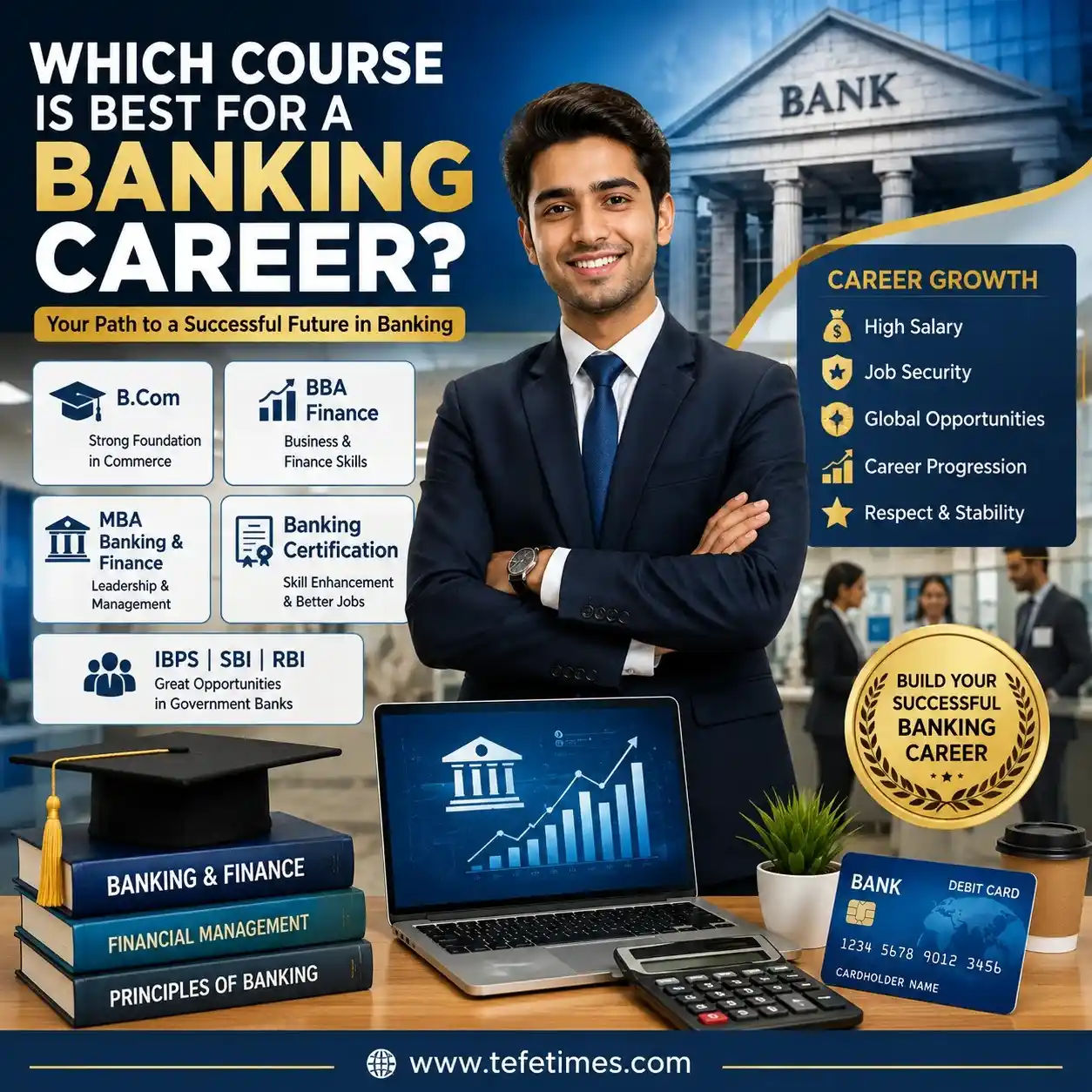
Which Course Is Best for a Banking Career?
The banking industry offers stable jobs, competitive salaries, and excellent career growth. Whether you dream of becoming a bank officer, investment banker, financial analyst, or branch manager, choosing the right course is the first step toward success.
Many students wonder, "Which course is best for a banking career?" The answer depends on your education level, career goals, and the type of banking role you want.
In this guide, you'll learn about the best banking courses, required skills, career opportunities, salary expectations, and practical tips to help you make an informed decision.
Primary Keyword
- Which course is best for a banking career
Secondary Keywords
- Banking courses
- Best course for bank jobs
- Banking and finance courses
- Courses after 12th for banking
Semantic Keywords
- Banking certifications
- Financial management
- Commercial banking
- Investment banking
- Banking exams
Long-Tail Keywords
- Best banking course after graduation
- Banking career after B.Com
- Diploma courses for banking jobs
- MBA in Banking and Finance
Search Intent
- Informational
Why Choose a Career in Banking?
Banking continues to be one of the most respected career fields worldwide. The industry offers opportunities in retail banking, corporate banking, investment banking, digital banking, risk management, and financial technology.
Some major benefits include:
- Stable employment
- Attractive salary packages
- Career progression
- Global opportunities
- Professional work environment
- Continuous learning
If you're interested in finance, customer service, or business management, banking can be an excellent long-term career choice.
Best Courses for a Banking Career
Here's a comparison of popular banking-related courses.
| B.Com | Commerce students | 3 Years | Bank Officer, Accountant |
| BBA Finance | Business & Finance | 3 Years | Banking Executive |
| BA Economics | Economics enthusiasts | 3 Years | Financial Analyst |
| MBA Banking & Finance | Leadership roles | 2 Years | Branch Manager, Investment Banker |
| Diploma in Banking | Quick entry | 6–12 Months | Banking Assistant |
| Chartered Financial Analyst (CFA) | Investment Banking | 2–4 Years | Portfolio Manager |
| Certified Banking Programs | Skill enhancement | Few Months | Banking Professional |
Best Banking Courses After 12th
If you've just completed high school, these programs provide a strong foundation.
1. Bachelor of Commerce (B.Com)
B.Com remains one of the most popular choices for banking aspirants because it covers:
- Accounting
- Business Law
- Taxation
- Banking Principles
- Financial Management
Many successful bank officers begin their careers with a B.Com degree.
2. Bachelor of Business Administration (BBA)
A BBA with a specialization in Finance prepares students for management and banking positions by teaching:
- Marketing
- Business Analytics
- Banking Operations
- Corporate Finance
3. Bachelor of Economics
Economics graduates develop analytical skills that banks value for roles involving market analysis, financial planning, and economic research.
Best Courses After Graduation
Graduates who want faster career growth can pursue advanced qualifications.
MBA in Banking and Finance
An MBA is one of the best options for management positions in banks.
Subjects usually include:
- Corporate Finance
- Risk Management
- Investment Banking
- International Banking
- Financial Strategy
Professional Banking Certifications
Professional certifications improve practical knowledge and strengthen your resume.
Popular certifications include:
- Certified Banking Professional
- Risk Management Certification
- Financial Planning Certification
- Anti-Money Laundering (AML)
- Treasury Management
Essential Skills for Banking Professionals
Degrees alone aren't enough.
Banks also value professionals with strong workplace skills.
Important skills include:
- Communication
- Numerical ability
- Customer relationship management
- Financial analysis
- Problem-solving
- Data interpretation
- Digital banking knowledge
- Attention to detail
- Ethical decision-making
Many employers now look for candidates who can adapt to digital banking platforms and financial technologies.
For more technology-related career insights, visit https://www.tefetimes.com/technology and explore practical software recommendations at https://www.tefetimes.com/tech-tools.
Step-by-Step Roadmap to a Banking Career
Follow this simple roadmap:
- Complete Class 12.
- Choose a bachelor's degree.
- Develop communication skills.
- Learn financial software.
- Complete internships if possible.
- Prepare for banking entrance exams.
- Earn relevant certifications.
- Apply for public or private bank positions.
- Continue upgrading your skills.
Consistency matters more than speed.
Best Resources to Learn Banking
Learning doesn't stop after college.
Helpful resources include:
- University programs
- Banking certification institutes
- Government banking exam portals
- Financial news websites
- Online finance courses
Trusted references:
- Investopedia's banking and finance guides
- World Bank reports on financial inclusion.
Real-World Example
Imagine two graduates.
Student A completes only a bachelor's degree.
Student B earns a bachelor's degree, completes a banking certification, improves Excel skills, and prepares for banking exams.
Who has better opportunities?
Most employers would prefer Student B because they demonstrate practical skills alongside academic qualifications.
Case Study
Sarah completed a B.Com degree and later earned a banking certification while preparing for competitive exams.
She also improved her financial analysis and communication skills.
Within two years, she secured a position as an Assistant Manager in a private bank and later transitioned into corporate banking.
Her journey shows that combining education with practical skills can significantly improve career prospects.
Common Mistakes Students Make
Many beginners struggle with this.
Avoid these common mistakes:
- Choosing courses without researching career goals
- Ignoring practical financial skills
- Poor communication abilities
- Not preparing for competitive exams.
- Depending only on academic qualifications
- Avoiding internships
Learning from these mistakes early can save both time and effort.
Practical Implementation Tips
Here's what works in real situations:
- Read financial news daily.
- Practice aptitude and reasoning questions.
- Learn spreadsheet tools.
- Build customer service skills.
- Attend banking webinars.
- Stay updated on digital banking trends.
Even one hour of focused learning each day can make a noticeable difference over time.
Budget-Friendly Ways to Prepare
You don't always need expensive programs.
Affordable options include:
- Free banking webinars
- Public libraries
- Government skill development initiatives
- Free financial news platforms
- Open educational resources
Smart learning often matters more than costly courses.
Expert Tips
To stand out in the banking industry:
- Build a strong LinkedIn profile.
- Learn financial software.
- Improve English communication.
- Practice interview questions.
- Understand banking regulations.
- Develop analytical thinking.
- Stay updated with fintech innovations.
If you're interested in finance trends beyond banking, explore https://www.tefetimes.com/finance. For broader career and lifestyle stories, visit https://www.tefetimes.com/ and don't miss the latest updates in https://www.tefetimes.com/entertainment.
Future Trends in Banking
Banking is evolving rapidly.
Growing areas include:
- Digital Banking
- Artificial Intelligence
- Blockchain
- Cybersecurity
- FinTech
- Sustainable Finance
- Data Analytics
- Mobile Banking
Professionals who embrace these technologies will likely enjoy stronger career opportunities in the coming years.
Conclusion
Choosing the best course for a banking career depends on your interests, educational background, and long-term goals. For many students, a B.Com or BBA provides a solid foundation, while an MBA in Banking and Finance or professional certifications can open doors to leadership roles.
Success in banking isn't based on one qualification alone. Employers increasingly value practical skills, digital knowledge, communication, and continuous learning. By selecting the right course, gaining relevant experience, and staying updated with industry trends, you can build a rewarding career in one of the world's most dynamic sectors.
Frequently Asked Questions
Which degree is best for banking?
A B.Com is one of the most popular degrees for banking careers, but BBA Finance, Economics, and MBA Banking & Finance are also excellent choices.
Can I get a bank job after 12th?
Most officer-level positions require graduation. However, some entry-level roles and training programs may be available after Class 12.
Is an MBA necessary for banking?
No. An MBA is beneficial for management and leadership roles but is not mandatory for many banking positions.
Which banking course has the highest salary potential?
MBA in Banking & Finance, CFA, and specialized investment banking programs generally lead to higher-paying roles.
Are banking certifications worth it?
Yes. Certifications demonstrate practical knowledge, improve employability, and can enhance career growth.
What skills are most important for a banking career?
Financial analysis, communication, customer service, analytical thinking, digital banking knowledge, and problem-solving are among the most valuable skills.
Final Reader Action Step
If you're planning a banking career, start by identifying your long-term goal, choosing a course that matches your interests, building practical financial skills, and staying informed about industry trends. A well-planned learning path today can lead to rewarding opportunities in the banking sector tomorrow.