Introduction
The job market is evolving faster than ever. Technologies are changing industries, businesses are becoming more digital, and employers are looking for professionals who can adapt to new challenges.
As we move into 2026, many traditional jobs are transforming, while entirely new career opportunities are emerging. This creates an important question:
Which skills should you learn today to secure high-paying jobs tomorrow?
Whether you are a student planning your career, a professional looking to switch industries, or someone interested in improving earning potential, learning the right skills can significantly impact your future.
In this guide, you'll discover the most in-demand skills for 2026, why employers value them, how to learn them, and practical ways to start building expertise.
For more career and learning resources, visit Tefetimes and explore insights from the Education section at Education.
Understanding the Future Job Market
The future workforce is being shaped by several major trends:
- Artificial Intelligence adoption
- Digital transformation
- Remote and hybrid work
- Cybersecurity concerns
- Data-driven decision making
- Cloud computing expansion
- Automation of repetitive tasks
According to reports from organizations such as the Weforum and OECD, employers increasingly prioritize skills over traditional qualifications.
This means practical knowledge and adaptability can often be just as valuable as a degree.
Benefits of Learning Future-Proof Skills
Developing high-demand skills offers several advantages:
Career Benefits
- Higher salary potential
- More job opportunities
- Better job security
- Global employment options
- Freelance and remote work possibilities
Personal Benefits
- Increased confidence
- Faster career growth
- Better problem-solving abilities
- Stronger adaptability to change
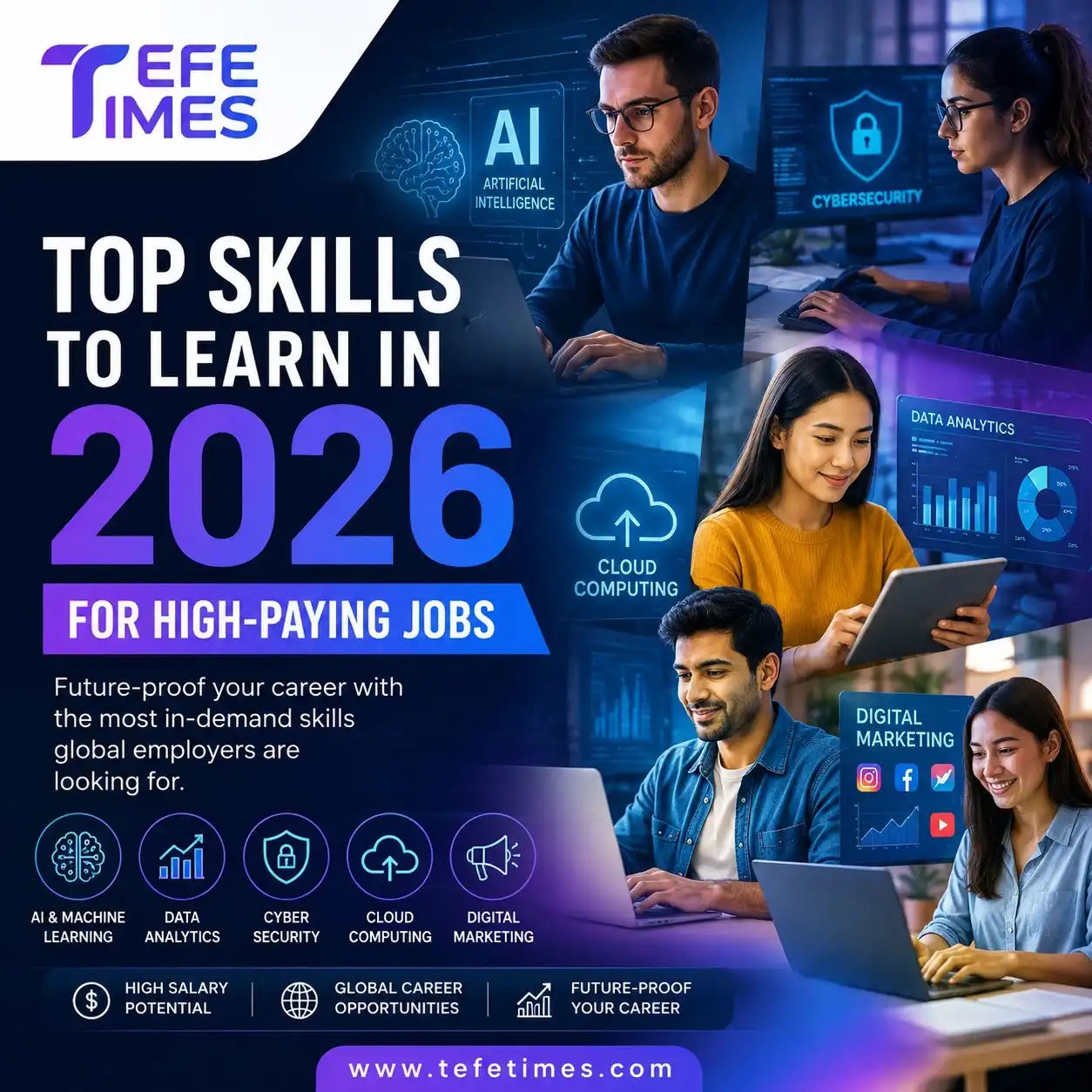
Top Skills to Learn in 2026
1. Artificial Intelligence (AI) Literacy
AI is becoming part of almost every industry.
You don't necessarily need to become an AI engineer. Understanding how AI tools work and how businesses use them can provide a major advantage.
Why It Matters
- Businesses are integrating AI into workflows.
- Productivity is increasing through AI-assisted tasks.
- Employers value workers who understand AI applications.
Learning Areas
- AI fundamentals
- Prompt engineering
- AI ethics
- Machine learning basics
- AI productivity tools
2. Data Analytics
Data drives business decisions.
Companies need professionals who can collect, analyze, and interpret information to improve performance.
Key Skills
- Data visualization
- Spreadsheet analysis
- Business intelligence
- Statistical thinking
- Reporting dashboards
Career Opportunities
- Data Analyst
- Business Analyst
- Market Research Analyst
- Operations Analyst
3. Cybersecurity
As digital systems grow, cyber threats continue to increase.
Organizations need experts who can protect sensitive information and secure networks.
Why Cybersecurity Is Growing
- Rising cyber attacks
- Increased cloud adoption
- Growing privacy regulations
Common Roles
- Security Analyst
- Ethical Hacker
- Security Consultant
- Incident Response Specialist
4. Cloud Computing
Most businesses now rely on cloud infrastructure.
Cloud professionals help organizations store, manage, and secure digital systems.
Popular Platforms
- Amazon Web Services (AWS)
- Microsoft Azure
- Google Cloud
High-Paying Roles
- Cloud Engineer
- Cloud Architect
- DevOps Specialist
- Infrastructure Consultant
5. Digital Marketing
Every business needs customers.
Digital marketing remains one of the most valuable skills because companies continuously compete for online visibility.
Important Areas
- SEO
- Content Marketing
- Social Media Marketing
- Email Marketing
- Paid Advertising
Why It's Valuable
Businesses that generate more traffic often generate more revenue.
6. Software Development
Software powers modern businesses.
Even basic coding knowledge can create valuable opportunities.
Popular Programming Languages
- Python
- JavaScript
- Java
- C#
- Go
Career Opportunities
- Software Engineer
- Web Developer
- Mobile Developer
- Full-Stack Developer
7. Project Management
Technical skills are important, but businesses also need people who can manage projects effectively.
Key Abilities
- Planning
- Leadership
- Communication
- Risk Management
- Team Coordination
Professionals with project management expertise are often promoted into leadership positions.
8. Communication Skills
Many people overlook this skill.
However, communication consistently ranks among the most desired skills worldwide.
Includes
- Public speaking
- Writing
- Negotiation
- Team collaboration
- Active listening
Even highly technical professionals benefit from strong communication abilities.
9. Financial Literacy
Understanding money is valuable in every profession.
Financial literacy helps professionals:
- Manage income
- Understand investments
- Evaluate business opportunities
- Make informed financial decisions.
10. Critical Thinking and Problem Solving
Technology changes quickly.
Employers increasingly seek individuals who can solve complex problems independently.
Why It Matters
- Automation handles routine tasks.
- Humans remain responsible for strategic thinking.
- Businesses need innovative solutions.
Step-by-Step Guide to Learning High-Income Skills
Step 1: Choose One Primary Skill
Avoid learning everything at once.
Focus on one skill that aligns with your interests and career goals.
Step 2: Build Foundations
Start with beginner-level courses and tutorials.
Step 3: Practice Consistently
Learning without application rarely works.
Create projects, case studies, or portfolios.
Step 4: Gain Real Experience
Volunteer, freelance, intern, or contribute to community projects.
Step 5: Build a Personal Brand
Share your learning journey online.
Document projects and achievements.
Best Learning Platforms and Resources
| Coursera | Professional Certifications |
| Udemy | Affordable Skill Courses |
| LinkedIn Learning | Business Skills |
| Google Career Certificates | Practical Job Skills |
| edX | University-Level Education |
Real-World Example
Consider two graduates entering the workforce.
Graduate A relies solely on a degree.
Graduate B combines a degree with data analytics and AI skills.
Over time, Graduate B often becomes more competitive because employers value both education and practical expertise.
This pattern is increasingly common worldwide.
Case Study Example
Sarah's Career Transition
Sarah worked in customer support.
She spent six months learning data analytics and dashboard reporting.
After building several portfolio projects, she applied for analyst positions.
Within a year, she transitioned into a higher-paying role with significantly better growth opportunities.
Her success came from focused skill development rather than additional degrees.
Common Mistakes Beginners Make
1. Learning Too Many Skills
Focus creates faster progress.
2. Avoiding Practical Projects
Employers often value demonstrated skills.
3. Chasing Trends Without Research
Choose skills with long-term demand.
4. Ignoring Soft Skills
Communication and leadership remain essential.
5. Quitting Too Early
Many people stop before reaching job-ready competence.
Practical Implementation Strategy
Use this weekly schedule:
Monday–Friday
- 45–60 minutes of learning
- 30 minutes of practice
Saturday
- Build projects
- Review concepts
Sunday
- Track progress
- Plan next week's goals
Consistency beats intensity.
Budget-Friendly Learning Methods
You don't need a large budget.
Affordable options include:
- Free online courses
- YouTube educational channels
- Public learning communities
- Open-source projects
- Digital libraries
Many successful professionals started using free resources.
Expert Tips for Faster Career Growth
Focus on Skill Stacking
Combine multiple complementary skills.
Examples:
- AI + Marketing
- Data Analytics + Finance
- Cloud Computing + Cybersecurity
- Software Development + Project Management
Build a Portfolio
Show what you can do.
Employers trust demonstrated results.
Network Consistently
Professional relationships often create career opportunities.
Future Trends Beyond 2026
Several emerging areas may continue growing:
- AI integration
- Quantum computing
- Advanced cybersecurity
- Robotics
- Green technology
- Digital healthcare
- Extended reality (XR)
Monitoring these trends can help you stay ahead of market changes.
Frequently Asked Questions
Which skill will be most in demand in 2026?
AI literacy, data analytics, cybersecurity, and cloud computing are expected to remain among the highest-demand skills globally.
Can I learn these skills without a degree?
Yes. Many employers now value practical skills, certifications, and portfolios alongside formal education.
Which skill offers the highest salary potential?
Cybersecurity, cloud architecture, software engineering, and AI-related roles often offer strong earning potential.
How long does it take to learn a new skill?
Basic proficiency may take 3–6 months with consistent practice, while advanced expertise often requires longer-term learning.
Should students start learning these skills now?
Absolutely. Early skill development can provide a competitive advantage before entering the workforce.
Conclusion
The future belongs to people who continuously learn and adapt.
The most successful professionals in 2026 will not necessarily be those with the most degrees. They will be those who develop valuable, practical skills that solve real-world problems.
If you're starting today, focus on one high-demand skill, practice consistently, build projects, and keep improving over time.
The opportunities created by AI, cybersecurity, data analytics, cloud computing, and digital business are only growing.
The best time to begin learning is now.
For additional career insights, technology updates, and educational resources, explore:
- https://www.tefetimes.com/
- https://www.tefetimes.com/education
- https://www.tefetimes.com/technology
- https://www.tefetimes.com/tech-tools
- https://www.tefetimes.com/finance
- https://www.tefetimes.com/entertainment
Final Reader Action Step
Choose one skill from this list today. Spend the next 30 days learning it consistently, complete at least one practical project, and document your progress. Small daily improvements can lead to major career opportunities in 2026 and beyond.