
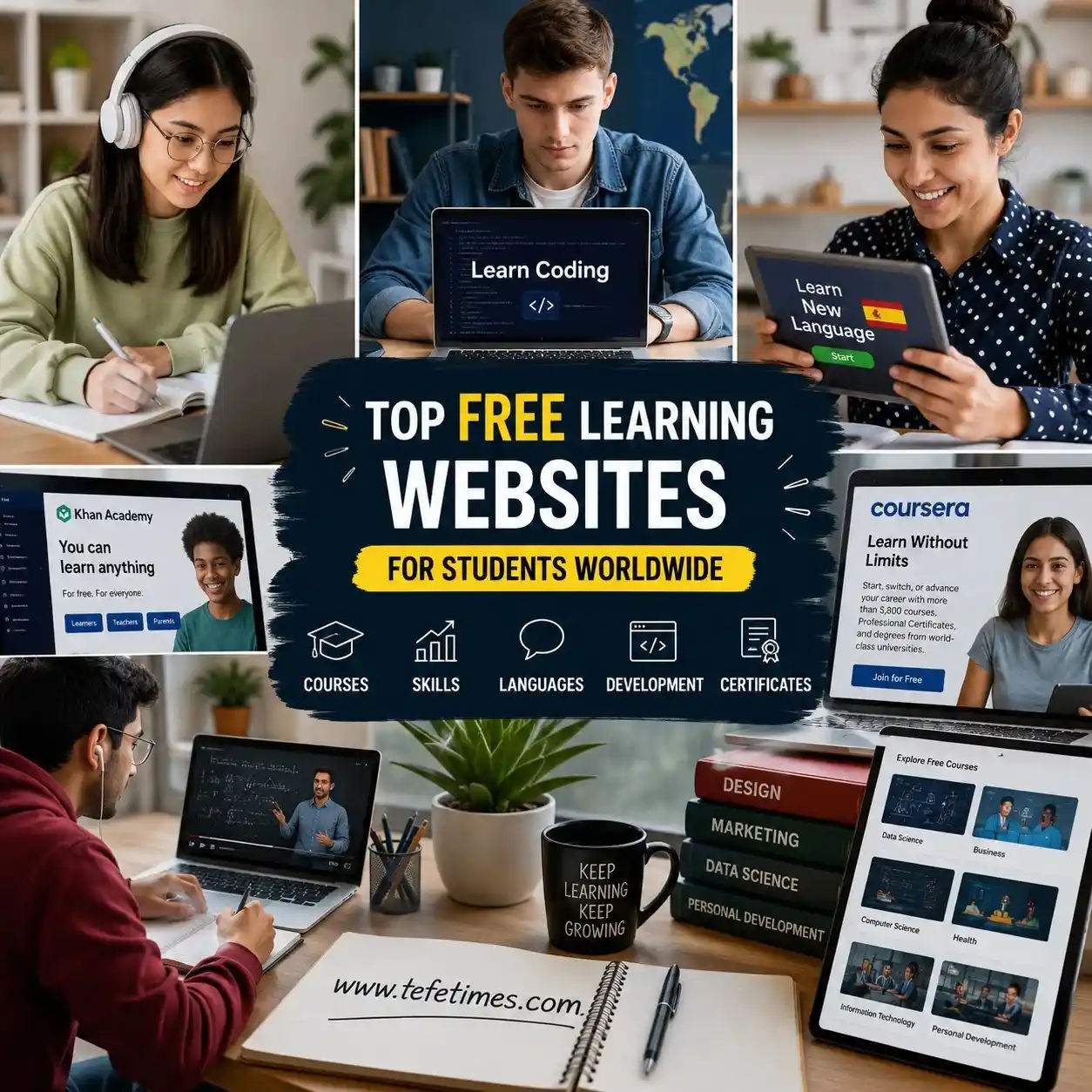
Top Free Learning Websites for Students Worldwide
In today’s digital world, learning is no longer limited to classrooms, expensive coaching centers, or university libraries. A student in India can learn coding from a teacher in the United States, improve English with lessons from the UK, or study science through interactive videos created in Australia — all for free.
That’s the power of online learning.
Whether you are a school student, college learner, job seeker, or someone trying to learn a new skill from home, free learning websites have completely changed education. You no longer need a huge budget to gain valuable knowledge. All you need is internet access, consistency, and the right learning platforms.
But here’s the problem.
There are thousands of websites online, and many students feel confused about where to start. Some platforms are too complicated, some are outdated, and others are filled with distractions instead of useful lessons.
This guide will help you avoid that confusion.
In this article, you’ll discover the best free learning websites for students worldwide, including platforms for school subjects, coding, languages, productivity, design, business, and self-improvement. You’ll also learn how to use these websites effectively, avoid common mistakes, and build a smart learning routine without spending money.
Why Free Learning Websites Are Becoming So Popular
Online education has grown rapidly over the last few years. Students now prefer flexible learning because it allows them to study anytime and anywhere.
Here are some major reasons why free learning platforms are gaining popularity:
- Learning from home saves travel time and money.
- Students can learn at their own pace.
- Many websites provide certificates and exercises.
- Free courses reduce educational expenses.
- Learners can explore career skills early.
- Mobile learning makes education more accessible.
You might be wondering…
Can free platforms really compete with traditional education?
In many cases, yes.
While schools and universities provide structure, online learning platforms offer flexibility, practical skills, and updated industry knowledge. Many professionals today learn digital skills online before getting jobs in fields like software development, graphic design, marketing, and data analysis.
What Makes a Good Free Learning Website?
Not every educational website is useful for beginners. A good learning platform should be:
| Beginner-friendly lessons | Makes learning easier for new students |
| Free access | Helps students with limited budgets |
| Interactive content | Improves engagement and understanding |
| Mobile compatibility | Allows learning from phones and tablets |
| Updated information | Keeps skills relevant |
| Practical exercises | Helps students apply concepts |
| Community support | Encourages motivation and problem-solving |
The best platforms combine simplicity, practical learning, and consistency.
Best Free Learning Websites for Students Worldwide
1. Khan Academy
One of the most trusted free educational platforms in the world, Khan Academy provides high-quality lessons for school and college students.
It covers subjects like:
- Mathematics
- Science
- Economics
- Computing
- Grammar
- History
The lessons are simple, visual, and beginner-friendly. Students can practice quizzes and track progress easily.
Best For
- School students
- Beginners in mathematics
- Exam preparation
- Self-paced learning
Let’s understand this with an example…
A student struggling with algebra can watch step-by-step explanations, solve practice questions, and repeat lessons anytime without pressure.
That flexibility helps many students build confidence.
2. Coursera
Coursera partners with universities and organizations worldwide to provide free access to thousands of courses.
Topics include:
- Business
- Computer science
- Psychology
- Marketing
- Artificial intelligence
- Data science
Many courses can be audited for free, meaning you can watch lessons without paying.
Best For
- College students
- Career skill development
- Professional certifications
- University-level learning
One advantage of Coursera is that students learn directly from universities and global experts.
3. edX
edX offers free courses from institutions like Harvard University and Massachusetts Institute of Technology.
Students can study:
- Engineering
- Programming
- Language learning
- Finance
- Science
- Humanities
The platform is especially useful for learners who want structured academic-style lessons.
Best For
- Serious learners
- College-level education
- Technical subjects
- Career advancement
4. freeCodeCamp
It offers hands-on coding practice in:
- HTML
- CSS
- JavaScript
- Python
- Web development
- Data analysis
The best part is that students learn by building real projects.
Best For
- Beginners in programming
- Web development learners
- Students exploring tech careers
Here’s what actually works…
Instead of watching endless tutorials, start building small projects. Even a simple calculator or portfolio website improves practical skills much faster.
5. Duolingo
The app uses short lessons, quizzes, and game-style learning to help students practice daily.
Popular languages include:
- English
- Spanish
- French
- German
- Japanese
Best For
- Language beginners
- Daily practice
- Vocabulary improvement
- Students learning English internationally.
Many students use Duolingo for just 10–15 minutes daily and slowly build strong language habits.
6. Udemy
Although many courses on Udemy are paid, the platform also offers thousands of free beginner courses.
Students can explore:
- Graphic design
- Personal development
- Coding
- Video editing
- Productivity
- Entrepreneurship
Best For
- Skill-based learning
- Short practical courses
- Career-focused learning
Before enrolling, always check course ratings and reviews.
7. YouTube
Today, thousands of educators share free lessons, tutorials, and explanations on almost every topic imaginable.
You can learn:
- Mathematics
- Physics
- Coding
- Video editing
- Public speaking
- Music
- Business skills
Best For
- Visual learners
- Free tutorials
- Quick explanations
- Practical demonstrations
However, students should avoid random distractions. Create playlists and follow educational channels instead of endlessly scrolling.
8. Codecademy
Codecademy is another excellent platform for coding beginners.
Unlike traditional video lessons, it allows students to write code directly in the browser.
Best For
- Interactive learning
- Coding beginners
- Practice-based education
Students who struggle with theory often learn faster through interactive exercises.
9. FutureLearn
FutureLearn provides courses from universities and organizations around the world.
Topics include:
- Healthcare
- Teaching
- Technology
- Business
- Creative arts
The platform focuses heavily on discussion-based learning and global participation.
Best For
- Collaborative learning
- International students
- Career exploration
10. Google Learning Resources
Google Digital Garage and other Google learning resources provide free training in:
- Digital marketing
- Career skills
- Productivity
- Data and tech fundamentals
Many courses also include certificates.
Best For
- Career-focused learners
- Marketing students
- Digital skill development
Best Free Learning Websites by Category
For School Students
| Khan Academy | Math, science, grammar |
| YouTube | Visual explanations |
| Coursera | Advanced concepts |
| edX | Academic learning |
For Coding and Technology
| freeCodeCamp | Full-stack development |
| Codecademy | Interactive coding |
| Coursera | Data science and AI |
| YouTube | Tutorials and projects |
For Language Learning
| Duolingo | Daily language practice |
| YouTube | Pronunciation and speaking |
| Coursera | Professional communication |
How Students Can Learn Effectively Using Free Websites
Many students join multiple platforms but never complete courses.
Why?
Because access to information is not the same as effective learning.
Here are practical strategies that actually help.
Step-by-Step Learning Strategy for Beginners
1. Choose One Skill at a Time
Do not try to learn everything together.
For example:
- Coding + graphic design + marketing + video editing all at once becomes overwhelming.
Instead, focus on one skill for 30 days.
2. Set a Small Daily Learning Goal
Consistency matters more than long study hours.
Good examples:
- 20 minutes daily
- One lesson per day
- One quiz daily
- One practice project weekly
Small goals reduce stress and improve discipline.
3. Learn Actively, Not Passively
Watching videos alone is not enough.
Students should:
- Take notes
- Practice exercises
- Build projects
- Explain concepts aloud
- Teach others
Active learning improves memory significantly.
4. Use Free Tools Alongside Learning Platforms
Helpful student tools include:
| Notion | Notes and planning |
| Google Docs | Assignments and writing |
| Canva | Presentations and design |
| Trello | Task management |
| Grammarly | Grammar improvement |
These tools help students stay organized and productive.
Common Mistakes Students Make in Online Learning
1. Collecting Courses Without Finishing Them
Many learners save courses endlessly but never study consistently.
Focus on completion instead of collection.
2. Learning Without Practice
Theory alone is not enough.
A coding student must build projects.
A language learner must speak regularly.
A designer must create real designs.
A language learner must speak regularly.
A designer must create real designs.
Practical application builds confidence.
3. Comparing Yourself With Others
Online learning is personal.
Some students learn quickly, while others need more repetition. Both are completely normal.
Progress matters more than speed.
4. Ignoring Revision
Students often watch lessons once and move on.
Instead:
- Revise weekly
- Rewatch difficult topics
- Solve practice problems
- Create summary notes
Revision strengthens long-term understanding.
Budget-Friendly Learning Tips for Students
Not every student has expensive devices or fast internet. Fortunately, effective learning is still possible on a small budget.
Affordable Learning Strategies
- Download videos for offline learning.
- Use mobile-friendly platforms
- Study in libraries or public Wi-Fi zones
- Share learning resources with friends
- Use free PDFs and notes.
- Practice using free software tools
You don’t need a perfect setup to start learning.
Even a smartphone and consistent effort can create powerful results over time.
Real-Life Example of Smart Online Learning
Imagine a college student named Alex.
Alex wants to learn web development, but cannot afford expensive coaching classes.
Here’s the strategy Alex follows:
- Learns HTML and CSS on freeCodeCamp
- Watches beginner tutorials on YouTube
- Practices projects daily
- Uses Canva for design ideas
- Creates a portfolio website
- Shares projects online
After several months, Alex develops practical skills that can be used for internships and freelance opportunities.
This is how many modern learners build careers today.
Best Study Habits for Online Learners
Create a Simple Study Routine
Example schedule:
| 30 minutes | Watch lessons |
| 20 minutes | Practice exercises |
| 10 minutes | Revision |
| Weekend | Mini project |
Short but consistent routines work better than long, irregular sessions.
Reduce Digital Distractions
While studying online:
- Turn off unnecessary notifications.
- Use focus mode apps
- Avoid social media during study sessions.
- Keep only study tabs open.
Digital discipline improves productivity.
Learn Through Projects
Projects help students understand concepts deeply.
Examples:
- Build a blog website.
- Create a simple app
- Design a poster
- Write short essays
- Record language practice videos
Projects make learning practical and memorable.
Future of Free Online Education
The future of learning is becoming more flexible, global, and skill-focused.
Students now learn from:
- Online communities
- Video platforms
- Interactive websites
- Virtual classrooms
- Mobile learning apps
Employers also increasingly value practical skills alongside traditional degrees.
That means students who continuously learn online may gain strong career advantages in the future.
How Parents and Teachers Can Support Online Learners
Parents and educators also play an important role.
Helpful support includes:
- Encouraging consistent study habits
- Providing quiet study spaces
- Helping students stay motivated
- Tracking progress gently
- Recommending useful educational resources
Supportive learning environments improve student confidence significantly.
If you want more educational tips, student guides, and career-focused learning content, visit TefeTimes Education Section for additional resources and beginner-friendly articles.
Trusted External Learning Reference
For additional research about global digital learning trends, students can explore reports and educational resources from UNESCO Education.
Final Thoughts
Free learning websites have made education more accessible than ever before.
Students no longer need massive budgets or expensive coaching to build valuable knowledge and skills. With the right platforms, daily consistency, and practical learning habits, anyone can improve academically and professionally from anywhere in the world.
The key is not joining dozens of platforms at once.
The real success comes from:
- Choosing one skill
- Learning consistently
- Practicing regularly
- Building projects
- Staying patient
Start small.
Even 20 focused minutes daily can create life-changing improvements over time.
The internet is filled with opportunities for learners today — and many of the best ones are completely free.