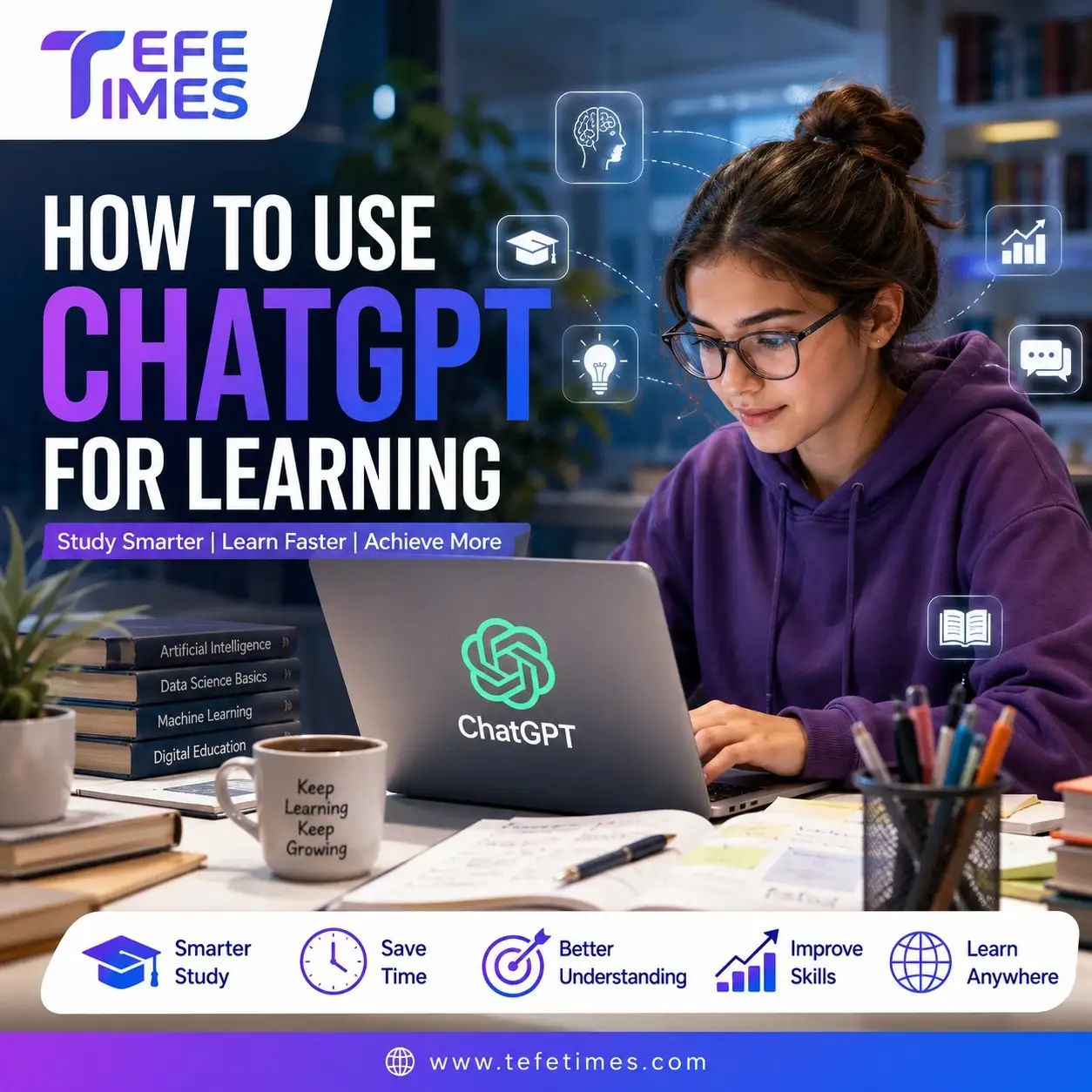
How to Use ChatGPT for Learning
Learning has changed dramatically in recent years. Students, professionals, teachers, and self-learners now have access to powerful AI tools that can make education more personalized and efficient. Among these tools, ChatGPT has become one of the most popular learning assistants worldwide.
If you have ever struggled to understand difficult concepts, organize study materials, find explanations, or improve your skills faster, ChatGPT can help. However, many people only use it for simple questions and miss its full learning potential.
In this guide, you'll discover how to use ChatGPT to learn effectively, practical study methods, common mistakes to avoid, and expert strategies to help learners worldwide achieve better results.
Understanding ChatGPT as a Learning Tool
ChatGPT is an AI-powered assistant designed to answer questions, explain concepts, generate examples, summarize information, and support learning across many subjects.
It can help with:
- School assignments
- College studies
- Language learning
- Coding practice
- Research preparation
- Exam revision
- Professional development
- Skill building
Unlike traditional search engines, ChatGPT provides conversational explanations that can be adjusted to your learning level.
Benefits of Using ChatGPT for Learning
1. Personalized Learning Experience
Every learner is different.
ChatGPT can explain topics in:
- Beginner language
- Intermediate detail
- Advanced academic style
This flexibility helps learners understand concepts at their own pace.
2. Instant Explanations
Instead of searching multiple websites, students can receive quick explanations and follow-up answers right away.
3. 24/7 Learning Support
ChatGPT is available whenever you need help.
Whether you're studying late at night or preparing for an exam, assistance is always available.
4. Improved Productivity
It can help organize:
- Notes
- Study plans
- Research outlines
- Project structures
This saves valuable time.
5. Better Understanding Through Examples
Many learners understand concepts faster through examples.
ChatGPT can generate:
- Practice problems
- Real-life examples
- Case studies
- Step-by-step explanations
Step-by-Step Guide to Learning with ChatGPT
Step 1: Define Your Learning Goal
Before asking questions, know what you want to achieve.
Examples:
- Learn Python programming
- Improve English writing
- Understand economics
- Prepare for an exam
Specific goals produce better results.
Step 2: Ask Detailed Questions
Instead of asking:
"Explain photosynthesis."
Try:
"Explain photosynthesis to a 12-year-old student with real-world examples."
The more context you provide, the better the response.
Step 3: Request Step-by-Step Explanations
Many beginners struggle because explanations are too complex.
Ask:
- Explain step by step.
- Use simple language
- Provide examples
- Compare with real-life situations.
Step 4: Create a Study Plan
Example prompt:
"Create a 30-day study plan for learning digital marketing."
This helps organize learning efficiently.
Step 5: Practice and Test Yourself
Ask ChatGPT to generate:
- Quizzes
- Multiple-choice questions
- Flashcards
- Practice exercises
Active learning improves retention.
Best Ways Students Can Use ChatGPT
Homework Assistance
ChatGPT can explain difficult questions and guide students toward understanding solutions.
Exam Preparation
Students can:
- Generate practice tests
- Review key concepts
- Create revision notes
- Identify weak areas
Research Support
ChatGPT can help:
- Understand topics
- Generate outlines
- Simplify academic concepts
Language Learning
Useful for:
- Vocabulary building
- Grammar correction
- Writing practice
- Conversation exercises
Essay Planning
Students can create:
- Essay outlines
- Topic ideas
- Argument structures
Best Tools and Resources to Combine with ChatGPT
| Google Scholar | Academic research |
| Khan Academy | Structured learning |
| Coursera | Online courses |
| YouTube | Visual learning |
| ChatGPT | Personalized assistance |
Combining multiple learning resources creates a stronger educational experience.
Helpful external references:
Real-World Examples
Example 1: Learning Programming
A beginner wants to learn Python.
ChatGPT can:
- Explain coding concepts
- Generate exercises
- Debug code
- Recommend projects
This accelerates learning significantly.
Example 2: Improving English
A learner can:
- Practice conversations
- Correct grammar mistakes
- Improve vocabulary
- Receive writing feedback
Example 3: Preparing for Exams
Students can ask:
"Generate 50 exam questions about world history."
This provides valuable revision material.
Case Study Example
Student Learning Data Analysis
A university student wanted to learn data analysis within three months.
Approach:
- Created weekly learning goals.
- Used ChatGPT for concept explanations.
- Practiced projects daily.
- Generated quizzes every weekend.
Results:
- Faster understanding of statistics.
- Improved confidence.
- Better exam performance.
- Ability to complete real-world projects.
This demonstrates how structured use of ChatGPT can improve learning outcomes.
Common Mistakes When Using ChatGPT for Learning
Relying on AI Without Verification
Always verify important information using trusted sources.
Copying Without Understanding
The goal is learning, not simply getting answers.
Asking Vague Questions
Poor questions often produce weak results.
Skipping Practice
Knowledge grows through application.
Ignoring Critical Thinking
Use ChatGPT as a guide, not a replacement for thinking.
Practical Implementation Strategies
Here is what works in real situations:
Daily Learning Routine
Morning:
- Learn a new concept
Afternoon:
- Practice exercises
Evening:
- Review key points
- Take a quiz
Weekly Learning Routine
- Set learning objectives
- Track progress
- Review mistakes
- Adjust study plans
Consistency matters more than intensity.
Budget-Friendly Learning Methods
One major advantage of ChatGPT is accessibility.
You can:
- Learn new skills
- Practice languages
- Improve writing
- Study academic subjects
Without spending large amounts on tutoring.
Additional budget-friendly resources can be found in:
- https://www.tefetimes.com/education
- https://www.tefetimes.com/technology
- https://www.tefetimes.com/tech-tools
Expert Tips for Learning Faster with ChatGPT
Use the Feynman Technique
Ask ChatGPT:
"Explain quantum physics like I'm 10 years old."
Simple explanations reveal true understanding.
Request Analogies
Analogies make complex ideas easier.
Example:
"Explain blockchain using a school notebook example."
Generate Practice Questions
Testing yourself improves memory.
Create Flashcards
Ask ChatGPT to create study flashcards from your notes.
Simulate a Tutor
You might be wondering how to make learning interactive.
Try:
"Act as a tutor and quiz me after every lesson."
This creates a more engaging experience.
Future Trends of AI-Powered Learning
Education continues to evolve rapidly.
Future developments may include:
- Personalized AI tutors
- Adaptive learning systems
- Real-time feedback tools
- AI-powered assessments
- Interactive virtual classrooms
As AI becomes more advanced, learning experiences will become increasingly personalized and accessible worldwide.
Frequently Asked Questions
Is ChatGPT good for students?
Yes. It helps students understand concepts, create study plans, practice questions, and improve learning efficiency.
Can ChatGPT replace teachers?
No. Teachers provide mentorship, human guidance, experience, and emotional support that AI cannot fully replace.
Is ChatGPT useful for exam preparation?
Yes. It can generate quizzes, summarize topics, explain concepts, and help organize revision schedules.
How can beginners learn effectively with ChatGPT?
Start with clear learning goals, ask detailed questions, request examples, and practice regularly.
Can professionals use ChatGPT for skill development?
Absolutely. Professionals use it to learn new technologies, improve communication skills, and stay updated in their industries.
Is information from ChatGPT always accurate?
Not always. Important information should be verified through trusted educational and professional sources.
Conclusion
ChatGPT has become one of the most powerful learning tools available today. Whether you are a student preparing for exams, a professional learning new skills, a teacher creating educational content, or a lifelong learner pursuing personal growth, ChatGPT can significantly improve the learning process.
The key is to use it strategically. Ask detailed questions, verify important information, practice consistently, and combine ChatGPT with trusted learning resources. When used correctly, it becomes a personalized learning assistant that helps you learn faster, understand concepts more deeply, and achieve your educational goals more efficiently.
The future of learning is becoming more personalized, accessible, and technology-driven—and ChatGPT is playing an important role in that transformation.
Final Reader Action Step
Open ChatGPT today and choose one skill you want to learn. Create a 30-day learning plan, spend 20–30 minutes practicing daily, and track your progress. Small, consistent learning sessions often produce bigger results than occasional intensive study.