
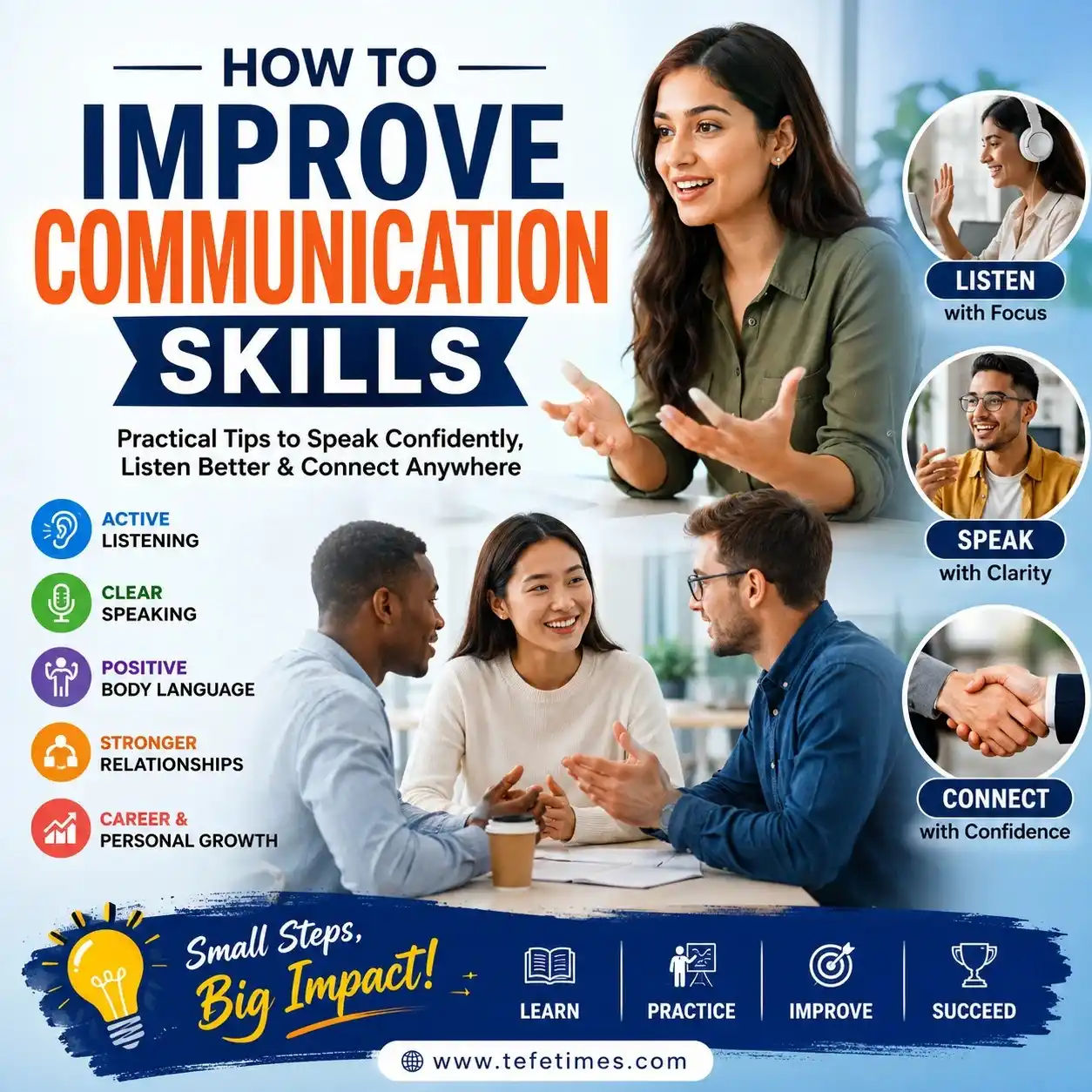
How to Improve Communication Skills
Communication is one of the most important life skills. Whether you are a student, teacher, professional, entrepreneur, or online learner, your ability to communicate affects almost every area of life.
Many people struggle to express ideas clearly. Some feel nervous while speaking. Others find it difficult to listen carefully or explain their thoughts confidently.
The good news is that communication is not a talent people are born with. It is a skill that can improve with practice.
In this guide, you will learn practical ways to improve communication skills, common mistakes to avoid, useful tools, and expert strategies that work globally.
You might be wondering:
Can communication skills really improve over time?
Yes. Small daily improvements often create major long-term results.
Let's understand how.
Why Communication Skills Matter
Good communication affects:
- Career growth
- Leadership ability
- Academic performance
- Personal relationships
- Team collaboration
- Problem-solving skills
- Confidence levels
People who communicate effectively often build stronger relationships and create better opportunities.
For example:
A student who asks clear questions learns faster.
A professional who explains ideas well may receive better career opportunities.
A business owner with strong communication skills can build trust with customers.
Communication influences success more than many people realize.
Core Components of Communication Skills
Strong communication involves several abilities working together.
1. Speaking Clearly
Clear speech helps people understand your message quickly.
Good speaking includes:
- Proper tone
- Simple language
- Organized thoughts
- Confidence
Example:
Instead of saying:
"Maybe the project sort of needs improvement."
Say:
"The project needs clearer goals and stronger organization."
Clear messages reduce confusion.
2. Active Listening
Communication is not only about speaking.
Listening carefully matters equally.
Active listening means:
- Paying full attention
- Avoiding interruptions
- Asking follow-up questions
- Understanding before responding
Many beginners struggle with this.
People often focus on preparing their reply instead of understanding the speaker.
Better listening improves communication immediately.
3. Body Language
Nonverbal communication shapes how people receive information.
Important body language habits include:
- Eye contact
- Facial expressions
- Posture
- Hand movements
For example:
Crossed arms may appear defensive.
An open posture often appears welcoming.
Body language can strengthen or weaken your message.
4. Emotional Awareness
Understanding emotions improves communication quality.
People communicate better when they:
- Control frustration
- Stay calm during disagreement.
- Show empathy
- Respect different viewpoints
Emotional intelligence often separates average communicators from excellent ones.
Benefits of Improving Communication Skills
Strong communication creates long-term advantages.
| Better career opportunities | Strong workplace performance |
| Higher confidence | Easier conversations |
| Better relationships | Reduced misunderstandings |
| Strong leadership ability | Better team performance |
| Improved learning | Faster understanding |
| Greater influence | Better persuasion skills |
Communication improvement creates benefits across life.
15 Practical Ways to Improve Communication Skills
1. Practice Active Listening Daily
Focus completely when someone speaks.
Try this method:
- Listen without interrupting
- Repeat important points mentally.
- Ask questions
Example:
Instead of immediately giving advice, say:
"Can you explain that part further?"
People appreciate feeling heard.
2. Expand Your Vocabulary
Better vocabulary improves clarity.
You do not need difficult words.
Focus on:
- Reading books
- Learning practical phrases
- Understanding professional terminology
Simple language often communicates better than complicated words.
3. Improve Speaking Confidence
Confidence develops through repetition.
Start small:
- Speak during meetings
- Ask questions in class.
- Join discussions
- Practice introductions
Small actions build communication strength.
4. Record Yourself Speaking
Many successful speakers use this strategy.
Record yourself explaining a topic.
Review:
- Speaking speed
- Clarity
- Filler words
- Tone
Common filler words:
- "Um"
- "Like"
- "Basically"
- "You know"
Reducing filler words improves professionalism.
5. Read More Frequently
Reading improves:
- Sentence structure
- Vocabulary
- Writing ability
- Communication flow
Useful reading materials:
- Educational articles
- Business books
- News platforms
- Industry publications
Consistent reading creates noticeable improvement.
6. Focus on Body Language
Communication is not only words.
Practice:
- Maintaining eye contact
- Sitting confidently
- Smiling naturally
- Avoiding excessive movement
Body language affects first impressions.
7. Ask Better Questions
Strong communicators ask strong questions.
Examples:
Weak question:
"Everything okay?"
Better question:
"What challenge are you facing right now?"
Better questions create deeper conversations.
8. Learn Public Speaking
Public speaking strengthens communication faster than many people expect.
You can practice:
- Presentations
- Video recordings
- Group discussions
- Online speaking opportunities
Confidence improves through exposure.
9. Think Before Speaking
Quick reactions sometimes create misunderstandings.
Pause briefly.
Consider:
- Purpose
- Audience
- Clarity
Good communication often begins with thoughtful communication.
10. Improve Writing Skills
Written communication matters globally.
Practice:
- Emails
- Professional messages
- Reports
- Social communication
Clear writing improves overall communication quality.
11. Watch Skilled Communicators
Observe experienced speakers.
Pay attention to:
- Speaking rhythm
- Tone changes
- Storytelling ability
- Audience engagement
Learning through observation works well.
12. Learn to Simplify Ideas
Experts often explain difficult ideas simply.
Example:
Complex explanation:
"Communication optimization enhances interpersonal interaction efficiency."
Simple explanation:
"Better communication improves relationships."
Simple messages reach more people.
13. Accept Feedback
Feedback helps growth.
Ask trusted people:
- Was my message clear?
- Did I explain effectively?
- What should improve?
Constructive feedback accelerates progress.
14. Join Communication Communities
Practice improves skill development.
Useful environments:
- Study groups
- Professional communities
- Speaking clubs
- Team projects
Communication grows through real interaction.
15. Practice Every Day
Consistency matters more than perfection.
Even 10–15 minutes daily creates improvement.
Small habits build lasting communication ability.
Common Communication Mistakes
Many people unknowingly reduce communication quality.
Avoid these mistakes:
Speaking Too Fast
Fast speaking reduces understanding.
Slow slightly.
Allow people time to process information.
Interrupting Others
Interruptions can damage conversation quality.
Listen fully.
Respond thoughtfully.
Using Too Much Complex Language
Simple communication often performs better.
Clarity wins.
Ignoring Body Language
Words matter.
Nonverbal signals matter too.
Strong communicators balance both.
Not Understanding Your Audience
Communication changes depending on who you speak with.
Example:
Teaching children differs from presenting to professionals.
Adjust your communication style.
Best Tools and Resources for Communication Improvement
Useful tools include:
Speech Practice Tools
- Voice recording apps
- Video presentation tools
- Speaking practice communities
Learning Resources
Books:
- How to Win Friends and Influence People
- Talk Like TED
- Crucial Conversations
Online Learning Platforms
Skill-building courses can improve:
- Public speaking
- Leadership communication
- Workplace communication
Continuous learning strengthens communication ability.
Real-World Example
Let's understand this with an example.
Sarah struggled during job interviews.
She often:
- Spoke too quickly
- Avoided eye contact
- Used unclear answers
She practiced:
- Mock interviews
- Speaking recordings
- Active listening
After several months:
- Confidence improved
- Interview performance improved
- Communication became clearer
Small improvements created major results.
Budget-Friendly Methods to Improve Communication Skills
Improvement does not require expensive training.
Affordable methods:
- Reading free educational articles
- Practicing conversations daily
- Recording practice sessions
- Joining free discussion communities
- Watching expert presentations
Consistency matters more than budget.
Expert Tips That Work Globally
Experts often recommend:
Focus on Listening First
Strong communication begins with understanding others.
Speak With Purpose
Clear goals improve message quality.
Keep Learning
Communication evolves.
Continuous improvement matters.
Practice Storytelling
Stories improve engagement.
Example:
Instead of listing facts only, explain experiences and examples.
People remember stories better.
Future Trends in Communication Skills
Communication continues to change globally.
Future communication trends include:
- Virtual collaboration skills
- Cross-cultural communication
- Digital communication ability
- Video presentation confidence
- Remote workplace communication
Technology changes communication methods.
Strong fundamentals remain essential.
Practical Implementation Plan
Try this 7-day communication improvement challenge:
Day 1:
Practice active listening.
Day 2:
Record yourself speaking.
Day 3:
Read 20 minutes.
Day 4:
Improve body language awareness.
Day 5:
Ask better questions.
Day 6:
Practice clear explanations.
Day 7:
Review progress.
Small actions create long-term results.
Key Takeaways
- Communication improves with practice.
- Listening matters as much as speaking
- Body language influences understanding.
- Simplicity improves clarity
- Feedback accelerates improvement
- Daily practice builds confidence.
Communication growth happens gradually.
Stay consistent.
Natural internal resource:
Explore more educational and learning insights at https://www.tefetimes.com/
Useful external learning references:
Conclusion
Learning how to improve communication skills can positively change education, careers, relationships, and confidence.
You do not need perfect communication.
You need consistent improvement.
Start with small steps.
Listen better.
Speak clearly.
Practice regularly.
Over time, communication becomes easier, stronger, and more natural.
The effort you invest today can create opportunities for years to come.
Frequently Asked Questions
How long does it take to improve communication skills?
Most people notice improvement within weeks when practicing consistently.
Can introverts improve communication skills?
Yes. Communication improves through practice regardless of personality type.
What is the fastest way to improve communication?
Active listening, daily speaking practice, and feedback often create faster improvement.
Why do people struggle with communication?
Common reasons include lack of confidence, limited practice, nervousness, and poor listening habits.
Are communication skills important for students?
Yes. Strong communication improves learning, teamwork, presentations, and future career opportunities.