
Introduction
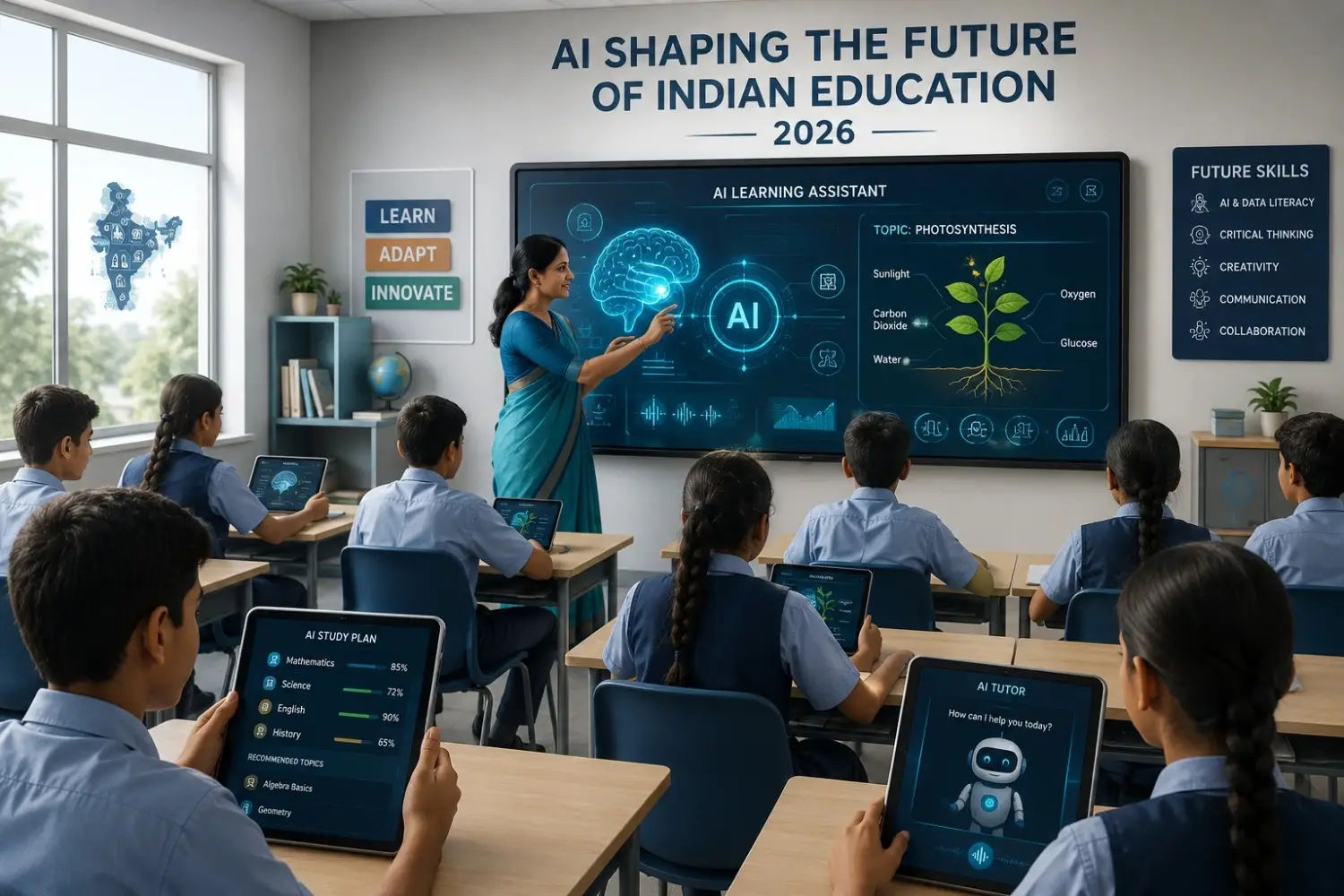
Education is changing faster than ever before. A few years ago, most students relied only on textbooks, classroom notes, coaching centers, and long study hours. Today, things look very different. Students can now learn from smart apps, AI tutors, personalized learning platforms, virtual classrooms, and even voice assistants.
You might be wondering if this is just another technology trend.
Here is the truth. Artificial Intelligence is no longer a future concept in education. It is already transforming how students learn, how teachers teach, and how schools operate.
In 2026, AI is becoming a major force behind modern education in India. From rural classrooms using AI-powered language tools to urban students preparing for competitive exams with adaptive learning apps, the impact is visible everywhere.
Even parents are starting to notice how AI-based tools can help children improve weak subjects, save time, and study more effectively.
At the same time, many people still have questions:
- Will AI replace teachers?
- Is AI good for students?
- Can AI improve education quality in smaller cities?
- What skills will students need in the future?
This article explores all of these questions in detail. You will learn how AI is shaping the future of education, the benefits and risks involved, practical examples, and what students and teachers should do to stay ahead.
For more education and technology insights, you can also explore TefeTimes.
What Is AI in Education?
Artificial Intelligence in education refers to smart technology systems that can perform tasks normally requiring human intelligence.
These systems can:
- Analyze student performance
- Give personalized recommendations
- Answer questions instantly
- Create learning plans
- Automate grading
- Detect weak learning areas
- Translate languages
- Improve online learning experiences
In simple words, AI helps make education smarter, faster, and more personalized.
Instead of every student learning the exact same way, AI allows learning to adapt according to each student’s pace and understanding level.
Why AI Is Growing Rapidly in Indian Education
Several reasons are driving the growth of AI in education across India.
1. Increased Internet Access
Affordable smartphones and cheaper internet have made online education available to millions of students.
Even students in smaller towns now access:
- Online classes
- AI learning apps
- Educational videos
- Practice tests
- Skill development platforms
2. Competitive Exam Pressure
Students preparing for exams like:
- JEE
- NEET
- UPSC
- SSC
- Banking exams
often need personalized guidance. AI tools help analyze strengths and weaknesses to improve performance.
3. Shortage of Skilled Teachers
Many schools still face a lack of experienced teachers, especially in rural regions.
AI-powered learning platforms help bridge this gap by offering quality educational support.
4. Government Focus on Digital Education
Digital education initiatives are encouraging schools and institutions to adopt modern learning technology.
5. Growing Demand for Future Skills
Students now need skills beyond traditional academics, including:
- Digital literacy
- Problem-solving
- Coding
- Data analysis
- Communication skills
AI-powered platforms help students build these modern career skills.
Major Ways AI Is Transforming Indian Education
Personalized Learning
One of the biggest advantages of AI is personalized learning.
Traditional classrooms often follow a one-size-fits-all approach. But every student learns differently.
Some students learn quickly.
Some need repetition.
Some prefer videos.
Others prefer reading.
Some need repetition.
Some prefer videos.
Others prefer reading.
AI systems track student behavior and adjust lessons accordingly.
Example
If a student struggles with algebra repeatedly, the AI platform may:
- Provide simpler explanations
- Suggest extra practice
- Recommend video lessons
- Create customized quizzes
This improves understanding instead of forcing students to move ahead too quickly.
AI Tutors and Chat-Based Learning
AI-powered tutors are becoming increasingly common.
Students can now ask questions anytime instead of waiting for school hours.
These AI tutors help with:
- Homework support
- Doubt solving
- Language learning
- Coding practice
- Writing improvement
For students who hesitate to ask questions in class, this creates a more comfortable learning environment.
Smart Content Creation
Teachers spend a huge amount of time preparing:
- Notes
- Worksheets
- Question papers
- Presentations
- Practice assignments
AI tools can now help generate educational material quickly.
This saves time and allows teachers to focus more on actual teaching and student interaction.
Automated Grading Systems
Checking assignments manually takes time, especially in large classrooms.
AI can help automate grading for:
- Multiple-choice tests
- Online quizzes
- Basic assignments
- Language assessments
Teachers can then spend more time helping struggling students rather than doing repetitive administrative work.
AI-Powered Language Translation
India has multiple languages, and language barriers often affect education quality.
AI translation tools now help students learn in their preferred language.
For example:
- English content can be translated into Hindi or regional languages
- Speech-to-text tools assist hearing-impaired students
- Voice assistants improve accessibility
This makes education more inclusive.
Virtual Classrooms and Smart Learning
Online learning platforms now use AI to improve classroom experiences.
Features include:
- Attendance tracking
- Student engagement monitoring
- Smart quizzes
- Interactive learning modules
- Performance analytics
Some platforms even detect when students lose focus during lessons.
AI in Schools vs Colleges
| Learning Style | Guided learning | Independent learning |
| AI Usage | Smart classrooms, personalized lessons | Research, analytics, skill development |
| Student Support | Homework help, basic concepts | Career guidance, advanced learning |
| Assessments | Automated quizzes | AI-based research evaluation |
| Career Preparation | Foundational skills | Industry-focused skills |
Benefits of AI in Indian Education
Better Learning Experience
Students receive more personalized support, making learning easier and less stressful.
Faster Doubt Resolution
Instead of waiting for teachers, students get quick answers.
Improved Accessibility
Students from remote areas can access high-quality education online.
Data-Based Progress Tracking
AI helps identify weak areas early.
This allows students and teachers to take corrective action faster.
Increased Engagement
Interactive AI tools make learning more interesting compared to traditional memorization methods.
Career Readiness
Students learn future-ready skills needed in modern industries.
Real-Life Examples of AI in Indian Education
Competitive Exam Platforms
Many online exam preparation platforms now use AI to:
- Analyze mock test performance
- Predict scores
- Recommend study plans
- Suggest important topics
Students preparing for entrance exams benefit significantly from these features.
AI-Based Language Learning Apps
Students learning English often use AI-powered pronunciation tools and grammar correction apps.
These tools improve confidence in communication.
Smart Attendance Systems
Some schools now use facial recognition and AI attendance systems to improve efficiency.
Career Guidance Platforms
AI-based career platforms analyze:
- Student interests
- Academic strengths
- Personality traits
and recommend suitable career paths.
How AI Helps Teachers
A common fear is that AI will replace teachers.
That is unlikely.
AI works best as a support tool, not a replacement for human teaching.
Teachers still provide:
- Emotional support
- Motivation
- Real-world understanding
- Discipline
- Creativity
- Human connection
AI mainly helps teachers become more productive.
Ways AI Assists Teachers
Lesson Planning
AI tools help organize topics and generate teaching resources quickly.
Student Performance Analysis
Teachers can identify struggling students faster.
Reduced Administrative Work
Automation saves time spent on grading and reporting.
Better Classroom Management
AI analytics help track attendance and participation.
Challenges of AI in Education
Despite many benefits, AI also brings challenges.
Digital Divide
Not all students have access to:
- Smartphones
- Laptops
- High-speed internet
This creates inequality.
Overdependence on Technology
Some students may rely too much on AI tools instead of developing independent thinking skills.
Data Privacy Concerns
Educational platforms collect student data.
Proper security and ethical use are important.
Reduced Human Interaction
Too much screen-based learning can reduce social interaction and communication skills.
High Implementation Costs
Many schools still cannot afford advanced AI systems.
Will AI Replace Teachers?
This is one of the most common questions in 2026.
The simple answer is no.
AI can support education, but it cannot fully replace teachers.
Here is why:
| Emotional understanding | Human empathy |
| Classroom inspiration | Personal mentorship |
| Social development | Real emotional connection |
| Creativity guidance | Human intuition |
| Ethical teaching | Human judgment |
The future is more likely to involve collaboration between teachers and AI systems.
Teachers who use AI effectively may become even more valuable.
Skills Students Need in the AI Era
Education is no longer only about memorizing information.
Students now need practical future-focused skills.
Critical Thinking
Students must learn how to analyze information rather than blindly trust technology.
Communication Skills
Human interaction remains extremely important.
Creativity
Creative problem-solving will continue to matter.
Digital Literacy
Students should understand how digital tools work.
Adaptability
Technology changes quickly. Students must be flexible learners.
Emotional Intelligence
Human empathy and teamwork skills cannot be replaced easily.
AI and Rural Education
One of the most powerful impacts of AI may happen in rural education.
Many rural schools face challenges like:
- Limited teaching staff
- Outdated learning materials
- Language barriers
- Lack of advanced coaching
AI-powered platforms can help reduce these problems.
How AI Supports Rural Students
Recorded Smart Lessons
Students can access quality lessons anytime.
Regional Language Learning
AI translation tools make learning easier.
Affordable Learning Resources
Digital platforms reduce dependency on expensive coaching centers.
Skill Development
Students can learn coding, communication, and digital skills remotely.
This could create better career opportunities for students from smaller towns and villages.
The Role of Parents in AI-Based Learning
Parents also play a major role.
Some parents worry that excessive technology use may distract children.
That concern is understandable.
The key is balance.
Tips for Parents
- Monitor screen time
- Encourage practical learning
- Focus on understanding, not shortcuts
- Support creativity and reading habits
- Teach responsible technology use
AI should support education, not completely control it.
AI and Career Opportunities in Education
AI is also creating new career opportunities.
Emerging Careers
| AI Education Specialist | Builds AI learning systems |
| Instructional Designer | Creates digital learning content |
| EdTech Consultant | Helps schools adopt technology |
| Learning Experience Designer | Improves student engagement |
| AI Trainer | Trains AI models for educational systems |
| Data Analyst in Education | Studies student performance data |
Students with technology and education knowledge may have strong career opportunities in the coming years.
Common Mistakes Students Make While Using AI Tools
Using AI Only for Quick Answers
Learning becomes weak if students copy answers without understanding concepts.
Ignoring Basic Fundamentals
Strong fundamentals still matter.
Overusing Shortcuts
AI should improve learning efficiency, not reduce effort completely.
Depending Fully on Technology
Offline reading, writing, and practical practice remain important.
Best Strategies for Students to Use AI Effectively
Use AI for Concept Clarity
Ask questions until you fully understand topics.
Combine AI With Traditional Learning
Books, teachers, and practice still matter.
Practice Independently
Try solving problems yourself first.
Learn Real Skills
Focus on communication, creativity, and analytical thinking.
Stay Curious
Technology changes constantly. Continuous learning is essential.
Step-by-Step Guide for Students to Prepare for the AI Future
Step 1: Improve Digital Skills
Learn how online learning tools work.
Step 2: Build Strong Communication
Practice speaking and writing regularly.
Step 3: Learn Problem-Solving
Employers value practical thinking.
Step 4: Develop Technical Awareness
Basic coding and digital knowledge can help.
Step 5: Stay Updated
Technology evolves quickly.
Reading educational blogs and industry updates regularly can help students stay informed. You can explore more educational and career-related articles on TefeTimes Education Section
Future Trends of AI in Indian Education
The next few years may bring even bigger changes.
AI-Based Career Counseling
Students may receive highly personalized career guidance.
Virtual Reality Classrooms
Immersive learning experiences could become more common.
Advanced Learning Analytics
Schools may use predictive analysis to identify learning gaps early.
AI-Powered Skill Training
Practical industry-based training may become more accessible online.
Smart Examinations
AI-based adaptive testing systems could improve assessment accuracy.
Practical Example: A Student’s Daily Routine in 2026
Imagine a student named Aarav.
He attends school during the day but uses AI tools at home for additional support.
His learning system:
- Tracks weak subjects
- Creates daily study plans
- Recommends revision sessions
- Helps improve English speaking
- Suggests practice questions based on performance
His teacher also receives reports showing where he struggles.
This creates a more connected learning system between students, parents, and teachers.
A few years ago, this level of personalization was difficult for most students.
Now it is becoming increasingly normal.
Is AI Good or Bad for Education?
The answer depends on how it is used.
AI can be extremely helpful when used responsibly.
It can:
- Improve accessibility
- Save time
- Personalize learning
- Support teachers
- Build future skills
But misuse can create problems like dependency and reduced critical thinking.
Balance is the key.
Technology should support human learning, not replace human intelligence completely.
Final Thoughts
AI is transforming Indian education in ways that were almost unimaginable a decade ago.
Students now have access to personalized learning, smart study systems, instant doubt solving, and global educational resources directly from their devices.
Teachers are becoming more efficient with automation and analytics.
Rural students are gaining better access to quality education.
At the same time, challenges like digital inequality, privacy concerns, and overdependence on technology still need attention.
The future of education will likely combine the strengths of both humans and technology.
Teachers will remain important.
Human creativity will remain valuable.
Critical thinking will matter even more.
Human creativity will remain valuable.
Critical thinking will matter even more.
Students who learn how to use AI wisely while also developing strong real-world skills may have a significant advantage in the future.
The education system is evolving rapidly, and those who adapt early may benefit the most.