
Healthcare Careers Without a Nursing Degree
Healthcare is one of the fastest-growing industries worldwide, offering countless opportunities for people who want to make a difference in others’ lives. While nursing is one of the most recognized healthcare professions, it is far from the only option. In fact, hospitals, clinics, laboratories, rehabilitation centers, pharmacies, and healthcare organizations rely on many skilled professionals who do not hold a nursing degree.
If you enjoy science, technology, patient care, or healthcare administration, there are numerous rewarding careers available that require different levels of education and training. Some positions can be entered with a certificate or associate degree, while others may require a bachelor’s degree or specialized certification. Many of these careers also provide competitive salaries, excellent job stability, and strong opportunities for advancement.
Whether you’re a student exploring career options, someone considering a career change, or simply interested in the healthcare industry, this guide will help you understand the best healthcare careers without a nursing degree, their responsibilities, education requirements, and future prospects.
Why Choose a Healthcare Career Without a Nursing Degree?
The healthcare industry continues to expand due to aging populations, advances in medical technology, and increasing demand for healthcare services worldwide. This growth has created opportunities across many specialized fields that support patient care without requiring individuals to become registered nurses.
Choosing a non-nursing healthcare career offers several advantages. Many roles have shorter education pathways, allowing students to enter the workforce more quickly. Several careers also provide attractive salaries, flexible working environments, and opportunities to specialize as technology and healthcare practices evolve.
In addition, healthcare professionals often experience strong job security because medical services remain essential regardless of economic conditions. Whether working in hospitals, diagnostic laboratories, outpatient clinics, rehabilitation centers, or remote healthcare settings, professionals in these careers play an important role in improving patient outcomes.
Top Healthcare Careers Without a Nursing Degree
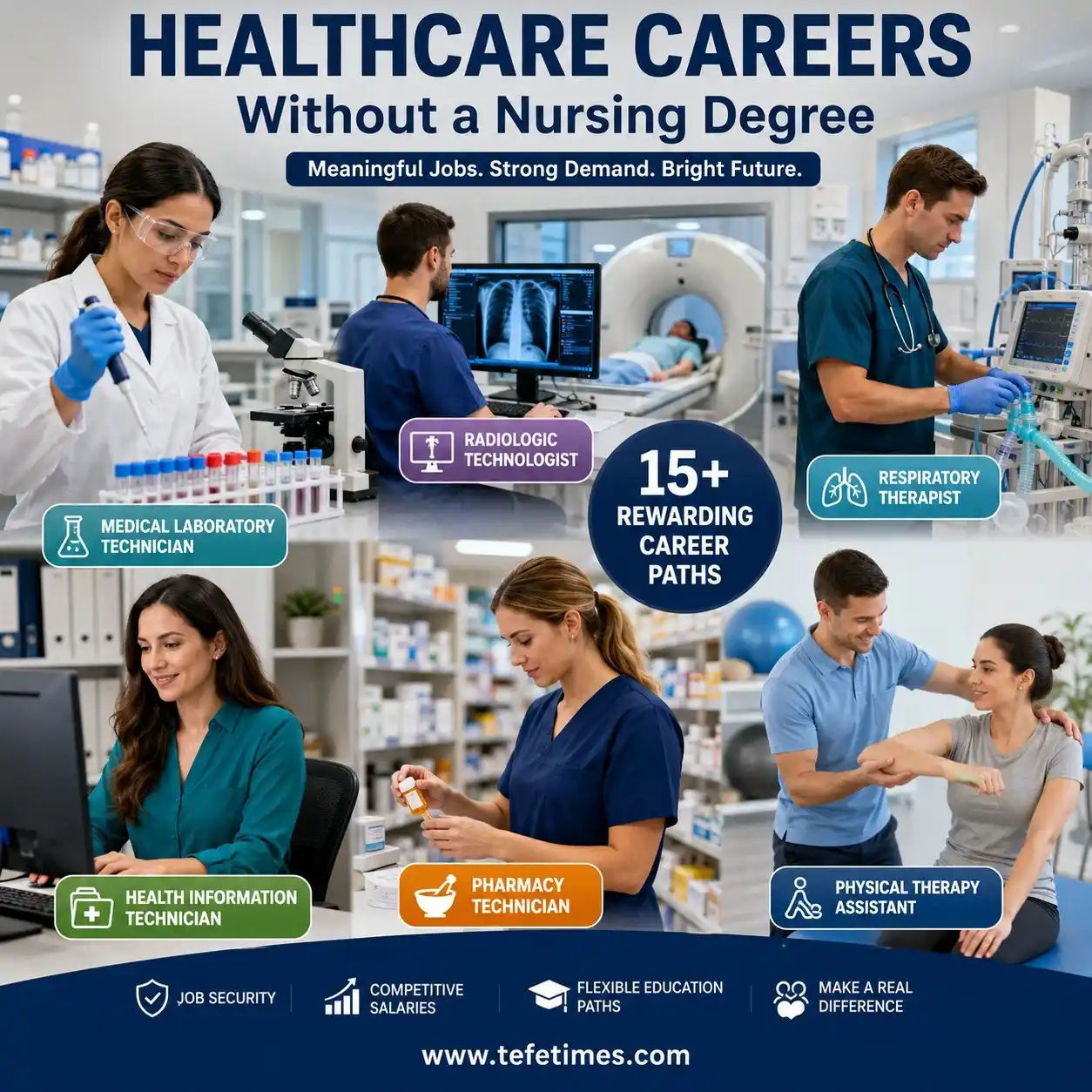
One of the most popular options is becoming a Medical Laboratory Technician. These professionals analyze blood, tissue, urine, and other biological samples that help physicians diagnose diseases and monitor patient health. They spend most of their time working with laboratory equipment rather than providing direct patient care, making this an excellent career for individuals who enjoy science and research.
Another highly respected profession is a radiologic technologist. Radiologic technologists operate imaging equipment such as X-ray machines to produce medical images used for diagnosis and treatment planning. With additional certifications, professionals can specialize in CT scans, MRI imaging, or mammography, increasing both career opportunities and earning potential.
Respiratory Therapists specialize in treating patients with breathing disorders, including asthma, pneumonia, chronic lung disease, and emergency respiratory conditions. They work closely with physicians and patients to administer oxygen therapy, operate ventilators, monitor breathing treatments, and educate patients about respiratory health.
For those who prefer healthcare administration rather than direct patient care, Health Information Technicians manage electronic medical records, ensure data accuracy, maintain patient confidentiality, and support healthcare organizations with medical coding and documentation. As healthcare becomes increasingly digital, demand for skilled health information professionals continues to grow.
Another excellent option is becoming a Pharmacy Technician. Pharmacy technicians assist licensed pharmacists by preparing prescriptions, organizing medications, processing insurance claims, and helping customers understand medication instructions. Many pharmacy technician programs can be completed within a relatively short period, making this one of the fastest ways to enter the healthcare industry.
Other rewarding careers include Physical Therapy Assistant, Occupational Therapy Assistant, Diagnostic Medical Sonographer, Surgical Technologist, Dental Hygienist, Medical Assistant, Cardiovascular Technologist, and Emergency Medical Technician. Each profession contributes to patient care in unique ways while offering opportunities for career advancement.
Benefits of Non-Nursing Healthcare Careers
Healthcare careers without nursing degrees provide numerous personal and professional benefits. Many professionals enjoy stable employment because healthcare services remain in constant demand across the world.
Additional benefits include:
- Strong employment opportunities
- Competitive salaries
- Career specialization options
- Opportunities to work with advanced medical technology
- Flexible work schedules
- Meaningful work that positively impacts patients
- Continuous learning and professional development
- Global career opportunities
These advantages make healthcare one of the most reliable career sectors for long-term growth.
How to Get Started
Beginning a healthcare career without a nursing degree requires careful planning.
Start by researching careers that match your interests and strengths. Consider whether you enjoy working directly with patients, using medical technology, performing laboratory work, or managing healthcare information.
Next, enroll in an accredited educational program that meets the licensing or certification requirements for your chosen profession. Accreditation is important because many employers only hire graduates from recognized institutions.
During your education, participate in internships or clinical placements whenever possible. Hands-on experience helps develop practical skills while improving your employment prospects after graduation.
Finally, continue building your knowledge through professional certifications and continuing education. Healthcare is constantly evolving, and lifelong learning helps professionals remain competitive.
Real-World Example
Imagine two friends graduating from high school with an interest in healthcare. One decides to pursue nursing, while the other enrolls in a radiologic technology program.
After completing their education, both begin working in a hospital. The nurse provides bedside care, administers medications, and monitors patient recovery. Meanwhile, the radiologic technologist performs diagnostic imaging that helps physicians identify fractures, internal injuries, and serious medical conditions.
Although their responsibilities differ, both professionals are equally valuable members of the healthcare team. This example illustrates that patient care depends on collaboration among many healthcare specialists, not only nurses.
Common Mistakes to Avoid
Many beginners choose healthcare careers without fully understanding the education requirements or daily responsibilities involved.
Some common mistakes include selecting a profession based only on salary, ignoring accreditation when choosing educational programs, failing to research certification requirements, and overlooking communication skills.
Healthcare employers value professionalism, teamwork, empathy, and adaptability just as much as technical knowledge. Developing these skills early can significantly improve long-term career success.
Expert Tips
Successful healthcare professionals recommend researching multiple career paths before making a decision. Speaking with professionals already working in the field, attending career fairs, and shadowing healthcare workers can provide valuable insight into daily responsibilities.
Improving computer skills, communication abilities, and problem-solving techniques will also make you a stronger candidate for future employment. Since healthcare technology continues to evolve, staying updated with new medical systems and digital tools is increasingly important.
Future Trends in Healthcare
Healthcare is changing rapidly due to technological innovation, artificial intelligence, telemedicine, and digital health records. Professionals with strong technical skills and a willingness to adapt will have access to even more career opportunities in the coming years.
Growing fields include medical imaging, health informatics, laboratory science, rehabilitation services, remote patient monitoring, personalized medicine, and healthcare data analysis. These areas are expected to continue expanding as healthcare systems modernize around the world.
Conclusion
A fulfilling healthcare career does not require becoming a nurse. The healthcare industry offers a wide variety of rewarding professions that allow individuals to contribute to patient care, medical research, diagnosis, rehabilitation, and healthcare management.
Whether you choose to become a medical laboratory technician, radiologic technologist, respiratory therapist, pharmacy technician, or health information specialist, each profession plays an essential role in delivering quality healthcare services.
Take time to research your options, compare education pathways, and choose a career that aligns with your interests, strengths, and long-term goals. With the right education, practical experience, and commitment to continuous learning, you can build a successful and meaningful healthcare career without earning a nursing degree.