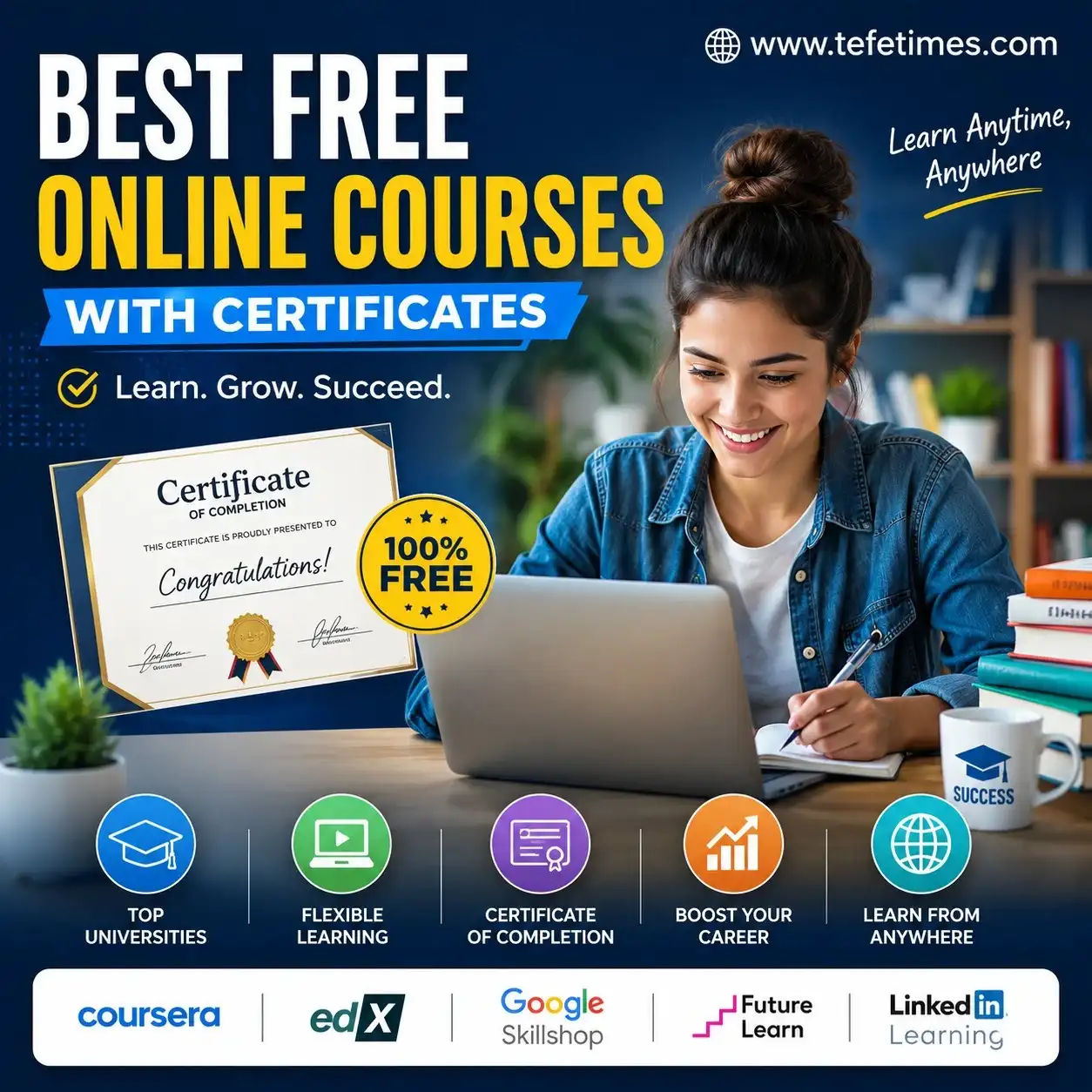
Online learning has changed education forever. Students no longer need expensive classrooms or costly training programs to learn valuable skills. Today, thousands of free online courses with certificates help learners build knowledge, improve careers, and gain practical abilities from anywhere in the world.
Whether you are a school student, college learner, beginner, job seeker, or someone learning for personal growth, free online education creates opportunities that were difficult to access a few years ago.
You might be wondering:
"Can free online courses actually help my future?"
The answer is yes—if you choose the right platforms and learn consistently.
This guide explores the best free online courses with certificates, how they work, where to find them, and how students worldwide can use them effectively.
For more education-related resources, learners can also explore Tefetimes.
Why Free Online Courses Are Becoming Popular
Modern education systems are changing quickly. Traditional learning still matters, but digital education gives students flexibility and affordability.
Free certificate courses are becoming popular because they offer:
- Flexible learning schedules
- Lower education costs
- Skill development opportunities
- Career improvement options
- Global access to quality education
- Self-paced study methods
A student in India, Brazil, Nigeria, Canada, or Germany can learn the same programming skills from the same platform.
That accessibility makes online learning powerful.
Benefits of Free Online Courses With Certificates
1. Budget-Friendly Learning
Education can be expensive.
Many students cannot afford premium courses or university programs immediately.
Free courses reduce financial pressure while helping learners build useful knowledge.
Examples include:
- Digital marketing
- Coding
- Graphic design
- Data analysis
- Business fundamentals
- Language learning
2. Learn at Your Own Speed
Traditional classrooms move at one pace.
Online education allows flexibility.
If a lesson feels difficult, students can:
- Pause videos
- Rewatch explanations
- Practice repeatedly
- Study during free time
This flexibility helps beginners significantly.
3. Build Career Skills
Employers increasingly value practical abilities.
Certificate courses can strengthen areas like:
| Technology | Programming, AI basics, cybersecurity |
| Business | Marketing, leadership, project management |
| Design | Graphic design, UX design |
| Data Skills | Excel, analytics, SQL |
| Communication | Writing, presentation skills |
Learning these skills early can improve career opportunities.
Best Free Online Course Platforms With Certificates
1. Coursera
Coursera offers courses from universities and institutions worldwide.
Popular topics:
- Computer science
- Business
- Data science
- Psychology
- Marketing
Many courses allow free learning, while selected programs provide certificates through financial aid or special programs.
Best for:
- College students
- Career learners
- Professional development
2. edX
edX provides university-level learning experiences.
Subjects include:
- Engineering
- Mathematics
- Computer programming
- Business management
Students interested in academic-style education often benefit from this platform.
Best for:
- Higher education learners
- Technical students
3. FutureLearn
FutureLearn focuses on practical online education.
Popular categories:
- Healthcare
- Technology
- Career development
- Business
Many short courses are beginner-friendly.
Best for:
- Busy learners
- Skill development
4. Google Skill Courses
Google offers free learning resources covering:
- Digital marketing
- Data analytics
- Career skills
- Technology basics
These courses are practical and beginner-focused.
Best for:
- Beginners
- Digital skill learners
5. LinkedIn Learning Free Programs
Some learning opportunities become available for free through promotions or institutions.
Topics include:
- Communication
- Leadership
- Software tools
- Productivity
Best for:
- Career preparation
6. Harvard Online Free Learning Programs
Harvard offers selected educational content online.
Popular areas:
- Computer science
- Data science
- Health studies
Many students explore these programs to experience university-level content.
7. Khan Academy
Khan Academy remains one of the best free learning platforms worldwide.
Subjects include:
- Math
- Science
- Economics
- Computing
Perfect for:
- School students
- Beginners
- Self-learners
Best Free Online Course Categories for Beginners
Programming and Technology
Technology skills continue to grow in demand.
Popular beginner subjects:
- Python programming
- Web development
- Cybersecurity basics
- Data analytics
- Artificial intelligence fundamentals
Example:
A college student studying business might learn Excel automation online and improve internship opportunities.
Digital Marketing
Businesses increasingly operate online.
Learning digital marketing helps students understand:
- SEO basics
- Social media marketing
- Content strategy
- Email marketing
These skills support freelancing and career growth.
Financial Literacy
Many schools do not fully teach money management.
Free financial education courses can help students learn:
- Budgeting
- Saving money
- Investing basics
- Personal finance planning
Practical financial knowledge benefits learners long-term.
Language Learning
Learning another language creates opportunities globally.
Popular languages:
- English
- Spanish
- French
- German
- Japanese
Free online education makes language learning more accessible.
Productivity and Study Skills
Academic success depends on learning methods—not only intelligence.
Useful course topics include:
- Time management
- Note-taking systems
- Focus techniques
- Memory improvement
How To Choose the Right Online Course
Many beginners make one common mistake:
They enroll in too many courses at once.
Instead, choose carefully.
Follow this process:
Step 1: Define Your Goal
Ask yourself:
- Career growth?
- Better grades?
- New hobby?
- Freelancing skills?
Clear goals improve learning consistency.
Step 2: Check Course Difficulty
Beginners should avoid advanced courses immediately.
Look for:
- Beginner labels
- Introduction courses
- Practical exercises
Step 3: Review Certificate Availability
Not all free courses include certificates.
Check:
- Certificate requirements
- Completion rules
- Assessment methods
Step 4: Study Reviews
Student feedback often reveals:
- Course quality
- Teaching clarity
- Difficulty level
Research first.
Common Mistakes Students Make in Online Learning
Taking Too Many Courses
Enrolling in five courses at once creates overwhelm.
Better strategy:
Start with one.
Complete it.
Then continue.
Watching Without Practicing
Learning requires action.
Example:
Watching coding videos without coding practice slows improvement.
Practical learning matters.
Inconsistent Study Schedules
Random learning often produces weak results.
Better approach:
Create a study routine.
Example:
Monday – 30 minutes
Wednesday – 45 minutes
Saturday – 1 hour
Consistency beats intensity.
Ignoring Certificates Completely
Certificates alone do not guarantee opportunities.
Skills matter more.
Use certificates to support practical learning.
Budget-Friendly Learning Setup for Students
Online education does not require expensive equipment.
Affordable learning setup:
| Internet | Basic broadband plan |
| Device | Smartphone or budget laptop |
| Notes | Free digital notes apps |
| Focus Tools | Pomodoro timer |
| Storage | Cloud storage free plans |
Simple systems often work effectively.
Useful Study Tools for Online Learners
Note-Taking Apps
Helpful tools:
- Notion
- Google Docs
- Microsoft OneNote
Productivity Tools
Students often struggle with distractions.
Helpful methods:
- Pomodoro technique
- Calendar scheduling
- Focus timers
Cloud Storage
Learning materials accumulate quickly.
Storage tools help organize:
- PDFs
- Notes
- Assignments
- Certificates
Real Student Learning Scenario
Let’s understand this with an example.
Imagine Sarah, a college student studying economics.
She wants better internship opportunities.
Her strategy:
- Completes a free Excel course
- Learns data visualization basics
- Builds small practice projects
- Earns certificates
- Adds skills to resume
After several months, Sarah becomes more competitive for internships.
The certificate helped—but consistent learning mattered more.
Future Trends in Online Learning
Education technology continues to change rapidly.
Future developments may include:
Personalized Learning
Learning experiences increasingly adapt to individual student needs.
Skill-Based Hiring
Companies increasingly evaluate practical skills.
Mobile Learning Growth
More students learn directly from smartphones.
Short Learning Programs
Micro-learning continues to become popular.
Short courses often improve completion rates.
How To Stay Motivated During Online Learning
Motivation changes over time.
Here’s what actually works:
Create Small Goals
Bad goal:
"Learn everything about programming."
Better goal:
"Finish one lesson today."
Track Progress
Use:
- Checklists
- Study journals
- Progress trackers
Small wins build momentum.
Build Learning Habits
Try:
- Same study time daily
- Dedicated study space
- Reduced distractions
Consistency creates results.
For broader online education research and learning resources, students can explore educational platforms like khanacademy.
Final Thoughts
Free online courses with certificates provide opportunities that previous generations rarely had.
Students worldwide can build skills, explore careers, improve productivity, and strengthen future opportunities without spending large amounts of money.
The key is not collecting dozens of certificates.
The real value comes from applying what you learn.
Start small.
Choose one skill.
Build consistency.
Practice regularly.
Over time, those small learning sessions can create meaningful progress.
The best time to begin learning online is not someday.
It is today.