
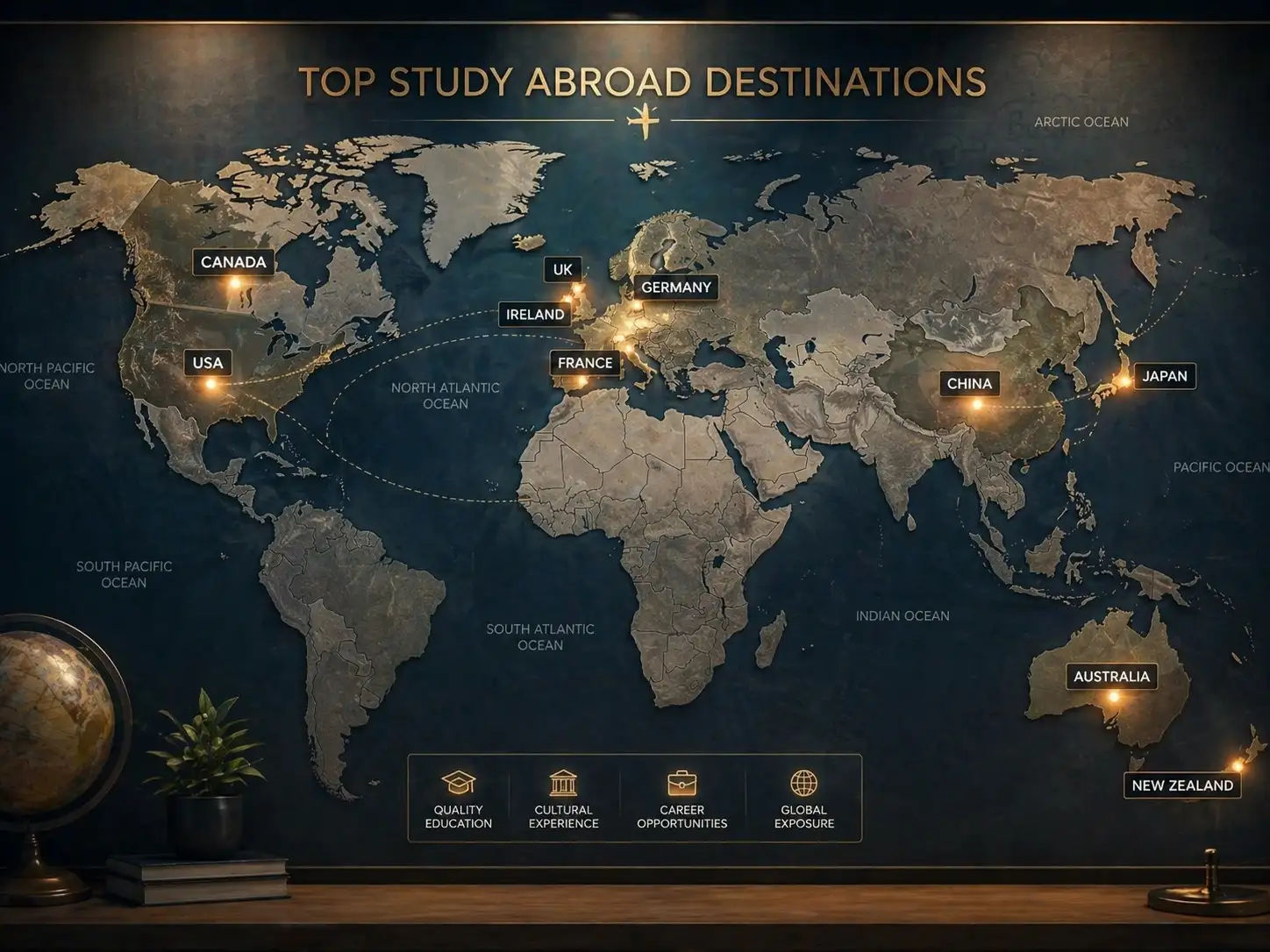
Studying abroad is no longer just a dream. For many students, it has become a practical step toward building a global career. But here’s the real question: which country should you choose in 2026?
You might be wondering why this decision feels so overwhelming. The truth is, every country offers something different—education quality, cost, lifestyle, job opportunities, and even immigration pathways.
In this detailed guide, you’ll discover the best countries to study abroad in 2026, along with practical advice, real examples, and smart strategies to help you make the right choice.
Introduction: Why Study Abroad in 2026?
The world is changing fast. Companies are becoming global, remote work is expanding, and employers now value international exposure more than ever.
Studying abroad gives you:
- Global career opportunities
- Exposure to new cultures
- Better education systems
- Higher earning potential
But choosing the wrong country can lead to:
- Financial stress
- Limited job opportunities
- Visa challenges
That’s why this guide is not just a list—it’s a decision-making roadmap.
Key Factors to Consider Before Choosing a Country
Before jumping into the list, let’s understand what really matters.
1. Cost of Education
Some countries offer free or low-cost education, while others are expensive but provide better ROI.
2. Work Opportunities
Look for countries that allow:
- Part-time work during studies
- Post-study work visas
3. Language Requirements
English-speaking countries are easier for most students, but learning a new language can be an advantage.
4. Immigration Pathways
Many students prefer countries that offer permanent residency options.
5. Quality of Life
Safety, healthcare, and lifestyle matter more than you think.
Best Countries to Study Abroad in 2026
Let’s break down the top destinations.
1. Canada
Canada continues to dominate as one of the best study destinations.
Why Choose Canada?
- High-quality universities
- Friendly immigration policies
- Strong job market
Key Benefits
- Post-Graduation Work Permit (up to 3 years)
- Affordable compared to many Western countries
- Multicultural environment
Popular Courses
- Business
- IT and Computer Science
- Healthcare
Real-Life Insight
Many students start with part-time jobs and later secure full-time roles after graduation.
2. Germany
If budget is your concern, Germany is a strong option.
Why Choose Germany?
- Tuition-free public universities
- Strong engineering programs
- Growing tech industry
Key Benefits
- Low living costs compared to Europe
- Opportunity to work in EU countries
- High demand for skilled professionals
Challenges
- Some courses require the German language.
- Competitive admission
3. Australia
Australia is perfect for students who want a mix of quality education and lifestyle.
Why Choose Australia?
- Top-ranked universities
- Flexible work options
- High quality of life
Key Benefits
- 2 to 4 years post-study work visa
- Strong job market
- English-speaking environment
4. United Kingdom
The UK offers fast-track degrees and global recognition.
Why Choose the UK?
- Shorter degree duration
- World-class universities
- Strong academic reputation
Key Benefits
- 2-year post-study work visa
- High employability
- Global networking opportunities
5. United States
The US remains a top choice for advanced education and innovation.
Why Choose the US?
- Home to top universities
- Research-focused programs
- Strong career opportunities
Key Benefits
- Optional Practical Training (OPT)
- Wide range of courses
- Strong alumni networks
Important Note
Costs can be high, but scholarships are available.
6. Ireland
Ireland is becoming increasingly popular, especially for tech students.
Why Choose Ireland?
- Tech hub with global companies
- English-speaking country
- Growing economy
Key Benefits
- 2-year post-study work visa
- Strong job opportunities in IT and finance
7. New Zealand
A peaceful country with quality education.
Why Choose New Zealand?
- Safe environment
- Practical learning approach
- Friendly visa policies
8. Netherlands
Known for innovation and English-taught programs.
Why Choose the Netherlands?
- High-quality education
- Many courses in English
- Strong job market
9. Sweden
Perfect for students interested in sustainability and innovation.
Why Choose Sweden?
- Focus on research and creativity.
- High standard of living
10. Singapore
A fast-growing education hub in Asia.
Why Choose Singapore?
- Strong economy
- Global exposure
- Proximity to India
Comparison Table: Best Countries at a Glance
| Canada | Medium | Yes | English | High |
| Germany | Low | Yes | German | High |
| Australia | High | Yes | English | High |
| UK | High | Yes | English | Medium-High |
| US | Very High | Yes | English | Very High |
| Ireland | Medium | Yes | English | High |
Step-by-Step Guide to Choosing the Right Country
Choosing a country is not about trends. It’s about fit.
Step 1: Define Your Goal
Ask yourself:
- Do you want a job abroad?
- Or just a degree?
Step 2: Set Your Budget
Include:
- Tuition fees
- Living expenses
- Travel costs
Step 3: Research Courses
Not all countries are best for every subject.
Step 4: Check Visa Rules
Some countries have strict policies.
Step 5: Look at the Job Market
Focus on industries that are growing.
Tips to Increase Your Chances of Success
- Apply early
- Prepare a strong SOP (Statement of Purpose)
- Improve English proficiency
- Build a good academic profile.
Common Mistakes to Avoid
Many students make these mistakes:
1. Choosing Based Only on Friends
Your goals may be different.
2. Ignoring Total Cost
Cheap tuition does not always mean affordable living.
3. Not Researching Job Opportunities
Some countries have limited jobs for international students.
4. Applying Late
Deadlines matter more than you think.
Practical Example
Let’s say a student wants to study Computer Science.
Option 1: Canada
- Moderate cost
- Good job opportunities
Option 2: Germany
- Low cost
- Strong technical education
Best Choice?
Depends on:
- Budget
- Language preference
- Career goals
Advanced Insights: What Will Matter in 2026
Education trends are shifting.
1. Skill-Based Learning
Degrees alone are not enough anymore.
2. Hybrid Education
Online + offline learning is growing.
3. Global Job Market
Employers are hiring internationally.
Final Actionable Advice
Choosing the best country is not about rankings. It’s about alignment.
Ask yourself:
- Where can I afford to study?
- Where can I build a career?
- Where will I feel comfortable living?
Start early, plan smart, and focus on long-term goals.